Idea Bank — Request for Climate Startups
Urban River Restoration
Commercial river cleanup and restoration services turning degraded urban waterways into assets.
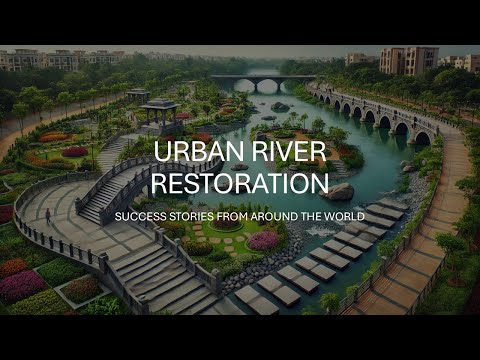
The ask
Build a project-development and remediation company that restores urban rivers and canals for municipalities, using the Chicago River and similar case studies as proof that decades of industrial damage can be reversed into ecotourism and real-estate value.
Why now
The Bangladesh National River Conservation Commission (NRCC) was granted judicial backing by the Supreme Court in 2019 to treat rivers as legal entities with rights — enforcement is now a court-mandated obligation, not a discretionary policy. International climate finance (GEF, Green Climate Fund, ADB) is actively funding urban water-body restoration in South Asia as a nature-based flood-resilience solution. The commercial real-estate premium near restored urban water bodies (documented at 15–30% in comparable Asian cities) gives municipalities and developers a financial incentive they did not previously have.
Why Bangladesh
Dhaka's Buriganga and Turag rivers are among the most polluted urban waterways in the world — decades of garment-effluent, sewage, and solid waste have rendered them ecologically dead. The Chittagong canals and Khulna's Rupsha are in similar condition. However, Bangladesh has a deep cultural attachment to rivers (the country is literally built on deltaic floodplains), and the Chicago example shows that reversal is achievable with sustained political will. A remediation company positioned as the private-sector execution arm for court-mandated NRCC orders occupies a defensible niche.
As a business
Revenue comes from three sources: government contracts for dredging, bank stabilisation, and effluent interception; real-estate joint ventures with developers building waterfront projects on restored corridors; and carbon and biodiversity credits generated by restored riparian ecosystems. The company is an engineering and project-development firm, not a charity — each contract needs a paying client, whether municipality, developer, or DFI grant.
Economics
Move the sliders to model a river restoration project. Defaults are order-of-magnitude estimates — pressure-testing them is part of what a founder pitches us.
Model an urban river restoration project
Does not break even within 5 years at these inputs — adjust the sliders. Hover or tap the chart for any month.
Illustrative model — defaults are order-of-magnitude estimates from public data, not a forecast. Pressure-test every number before you build.
What AimHuge would back
An environmental engineer or urban planner who has already navigated NRCC, BWDB, or WASA procurement — the bureaucratic path is the moat, not the remediation technology. We would back a founder who brings a signed MOU or letter of intent from a municipality alongside the pitch, not just a vision deck.
Impact
Restoring one kilometre of Buriganga or Turag riverbank can remove tens of thousands of tonnes of accumulated industrial sediment, eliminating a chronic methane source and restoring riparian vegetation that sequesters carbon at 2–5 tCO₂e/ha/yr. Cleaner urban waterways directly reduce waterborne-disease burden on nearby communities and cut flooding losses — Dhaka's 2022 urban-flood damage exceeded ৳5,000 crore. Real-estate premiums of 15–30% documented on comparable restored Asian corridors translate into a genuine tax-revenue uplift for municipalities, creating the economic case to fund repeat contracts.
Also being built elsewhere
Companies proving the model in other markets.
Executes river-basin remediation and water-environment management contracts for municipalities — the commercial template for private river-remediation at scale.
Full-service water remediation contractor; presence in Bangladesh shows market is accessible to private operators with the right government relationships.
More Water ideas
Other climate businesses we want built.