Idea Bank — Request for Climate Startups
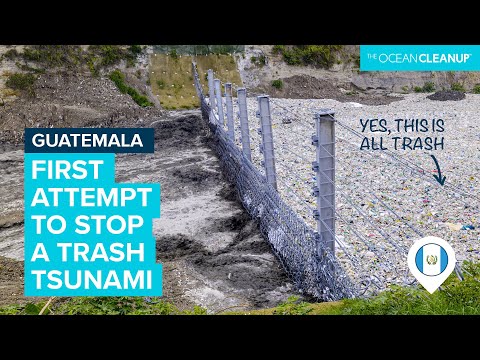
River Trash Fence
River-mouth trash-fence systems intercepting plastic before it reaches the Bay of Bengal.
The ask
Design, manufacture, and operate modular floating trash-fence systems at river mouths and canal outlets across Bangladesh, recovering plastic waste before it enters the Bay of Bengal — and generate revenue from plastic offtake, plastic-credit sales, and contracted municipal waste-interception services.
Why now
Bangladesh is one of the world's top ten ocean plastic emitters, primarily via its river network — the Buriganga, Turag, Shitalakshya, and Meghna carry enormous plastic loads from Dhaka's 23 million residents. Ocean Conservancy and The Ocean Cleanup have demonstrated that river-interception is 10–100× more cost-effective than open-ocean cleanup per tonne recovered. Plastic credits (verified via Verra or Plastic Bank protocols) now trade at $50–200 per tonne, making the economics of interception viable without full municipal contract dependency. Bangladesh signed the Global Plastics Treaty in 2024, creating political will for funded pilot programmes.
Why Bangladesh
Dhaka's urban waterways are the most plastic-loaded river systems in the world by some estimates — Buriganga water has tested positive for microplastics at densities exceeding any monitored European river. City corporations and BWDB have waterway-cleaning mandates but no effective interception infrastructure. Recovered PET, HDPE, and polypropylene have ready buyers in Bangladesh's large plastic recycling industry in Dhaka and Narayanganj. The combination of grant capital (Global Plastic Action Partnership, UNDP) and commercial revenue (credits + offtake) creates a blended-finance structure that can de-risk early deployments.
As a business
Revenue is three-layered: municipal contracts (city corporations pay ৳2–5 crore per year per deployment zone for waterway cleaning), plastic offtake (recovered plastic sold at ৳15–35/kg to recyclers), and plastic credits (Verra-verified, sold internationally at $80–150/tonne). The fence hardware itself can be manufactured locally in Bangladesh at 40–60 % of European equivalent cost, creating a replicable product for sale to municipalities in other river-polluted countries.
Economics
Move the sliders to model your own river trash-fence operation. Defaults are order-of-magnitude estimates — pressure-testing them is part of what a founder pitches us.
Model a river trash-fence operation
Does not break even within 5 years at these inputs — adjust the sliders. Hover or tap the chart for any month.
Illustrative model — defaults are order-of-magnitude estimates from public data, not a forecast. Pressure-test every number before you build.
What AimHuge would back
A founder who has deployed at least a small-scale river interception system and has weight-based recovery data. We are specifically looking for someone who has spoken with Verra or a plastic-credit auditor and understands the certification pathway. The ideal team combines engineering (fence design, operations) with policy access (city corporation or BWDB relationship) — this is not a business you can build purely from the outside.
Impact
Three active fence sites each recovering 8 tonnes of plastic per month divert 288 tonnes/year of plastic from the Bay of Bengal — preventing ocean micro-fragmentation and supplying domestic recyclers with material that displaces ~1,000 tCO₂e/year of virgin plastic production. Plastic credit revenue under Verra or Plastic Bank protocols adds a second income stream while providing global brands with verifiable supply-chain decontamination. Dhaka's rivers are among the most plastic-loaded on earth; fence interception at canal chokepoints creates measurable, auditable environmental outcomes that catalyse further municipal co-funding.
Also being built elsewhere
Companies proving the model in other markets.
Fence-based river interception removing millions of kg of trash — technology proof, though at higher cost than a BD-adapted version.
Air-bubble curtain intercepts 86% of riverine plastic in Amsterdam canals — validates municipal willingness to fund interception contracts.
Low-cost modular fence barriers in Balinese rivers generating plastic-credit revenue and upcycling collected material.
More Water ideas
Other climate businesses we want built.