Idea Bank — Request for Climate Startups
Urban Bioswales
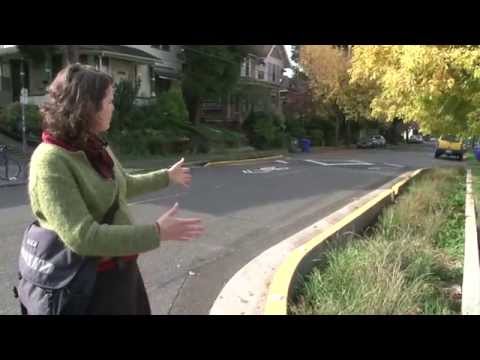
Planted drainage channels along Dhaka streets that absorb flash floods and filter urban runoff.
The ask
Build and maintain a network of bioswale channels — linear planted trenches filled with engineered gravel-soil media and native vegetation — along residential roads and commercial streets in Dhaka, contracted to City Corporation wards and private real-estate developers as a low-cost green drainage alternative that simultaneously beautifies streetscapes.
Why now
Dhaka floods every monsoon season — not because of river inundation but because its stormwater drainage network (built for 2 million people, now serving 22 million) cannot absorb even moderate rainfall events. The DNCC and DSCC are spending hundreds of crore annually on grey drainage upgrades that are slow, expensive, and routinely disrupted by utility conflicts underground. Bioswales — proven in Singapore, Seoul, and Portland's Clean River Rewards programme — cost $20–60/linear metre to install versus $150–400/m for new underground culverts, and deliver co-benefits (urban cooling, air quality, biodiversity) that grey infrastructure cannot. The World Bank's Dhaka Urban Resilience Project (FY24) specifically flags green infrastructure as a priority.
Why Bangladesh
Dhaka is ranked among the world's most flood-vulnerable megacities; the 2022 monsoon submerged 40% of the city for multiple days, causing ৳3,000+ crore in economic damage. Local government ward offices are under political pressure to show visible flood-response action before the next election cycle. Bioswales are visually immediate — they look like gardens — making them far easier to sell to elected officials than invisible grey infrastructure. Bangladesh has cheap skilled labour for earthworks and landscaping (৳600–900/day) and native plant species (Vetiver grass, Screw pine, Brahmi) that are extremely effective at stormwater retention and available cheaply from existing nurseries.
As a business
Revenue from two sources: DNCC/DSCC ward contracts for installation and a 3–5 year maintenance retainer (৳8,000–15,000/linear metre install + ৳1,200–2,000/m/year maintenance), and private-sector contracts from real-estate developers who need drainage compliance for building permits. The maintenance retainer is the recurring revenue that makes the business durable; installation alone is a project business.
Economics
Move the sliders to model your own bioswale contracting business. Defaults are order-of-magnitude estimates — pressure-testing them is part of what a founder pitches us.
Model a bioswale contracting business
Clears its setup cost after ~6 months, then profit (volt) from there. Hover or tap the chart for any month.
Illustrative model — defaults are order-of-magnitude estimates from public data, not a forecast. Pressure-test every number before you build.
What AimHuge would back
A founder who combines civil engineering credentials with a political foot inside a Dhaka ward office — someone who can turn one councillor's flood-response anxiety into a signed pilot contract. We'd fund a 500-metre demonstration installation in a high-visibility ward, instrument it to measure runoff reduction, and use that data to win the World Bank Dhaka Urban Resilience procurement. The maintenance retainer model is what makes this a company rather than a consulting firm.
Impact
Bioswales intercept stormwater that would otherwise overwhelm Dhaka's undersized grey drainage, directly reducing flood-related economic damage estimated at ৳3,000+ crore per major monsoon event. Each linear metre of installed bioswale sequesters ~0.05 kg CO₂e/year in soil carbon and biomass while shading adjacent pavement to cut urban heat-island intensity by 1–3°C. At 3,000 metres installed per year, the business also creates ~15 FTE of skilled green-infrastructure employment that cannot be automated or offshored, directly benefiting urban workers in Dhaka's informal construction economy.
Also being built elsewhere
Companies proving the model in other markets.
City-wide bioswale and blue-green grid programme — Bishan-Ang Mo Kio Park naturalised an entire canal into a flood-resilient linear bioswale park.
City-contracted green stormwater infrastructure programme — proof that municipalities will pay long-term contracts for bioswale networks.
More Water ideas
Other climate businesses we want built.