Idea Bank — Request for Climate Startups
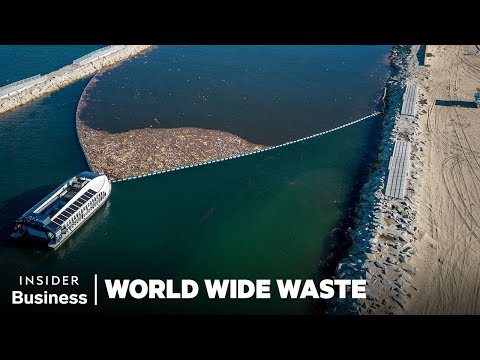
DIY River Trash Barriers
Low-cost floating barriers made from local materials intercept river plastic before it reaches the sea.
The ask
Manufacture and deploy low-cost floating trash barriers — built from locally available bamboo, PVC pipe, and net — that intercept plastic waste in urban river channels, with a collection and sorting service that aggregates material for downstream recyclers.
Why now
Bangladesh is estimated to be the 10th-largest ocean plastic polluter globally; the majority enters through its dense river network. The Ocean Cleanup has demonstrated floating barrier technology but at costs unaffordable for a lower-middle-income country. DIY barrier designs proven in Indonesia and the Philippines show that 90% of the same capture efficiency can be achieved at 5–10% of the cost using local materials and community labour.
Why Bangladesh
Dhaka alone sits on three major rivers and dozens of canals that funnel plastic from a city of 22 million people. City corporations face international pressure to reduce ocean plastic output; several are actively seeking low-cost river intervention solutions but have no local supplier. The Buriganga, Turag, and Balu rivers each have chokepoints where a single barrier can intercept high plastic-load flow — making deployment efficient rather than diffuse.
As a business
Revenue comes from city corporation and NGO contracts to install and maintain barriers (service contract model), plus sale of collected and sorted plastic to recyclers. The plastic revenue partially offsets the service contract cost, making the net cost to city authorities competitive. Each barrier installation is a marketing event — visible, photographable, and politically popular — which shortens the sales cycle for subsequent deployments.
Economics
Move the sliders to model your own river barrier business. Defaults are order-of-magnitude estimates — pressure-testing them is part of what a founder pitches us.
Model a river trash barrier business
Does not break even within 5 years at these inputs — adjust the sliders. Hover or tap the chart for any month.
Illustrative model — defaults are order-of-magnitude estimates from public data, not a forecast. Pressure-test every number before you build.
What AimHuge would back
A founder who already has one installed barrier with photographic and tonnage evidence, and a direct relationship with a Dhaka or Chittagong city official. The sales motion is entirely relationship-driven in the public procurement context; a technically competent founder without government access will stall.
Impact
Each bamboo-and-net barrier intercepting 1,200 kg of plastic per month prevents roughly 14.4 tonnes/year of plastic from reaching the Bay of Bengal — plastic that would otherwise fragment into microplastics with a centuries-long ecological half-life. At 8 active barrier sites, the business prevents ~115 tonnes/year of ocean plastic, avoids the carbon cost of virgin plastic production (~3.5 kg CO₂e/kg), and supplies 115 tonnes of feedstock to Bangladesh's domestic recycling sector, saving ~$160,000/year in plastic imports. Visible canal cleanup also reduces waterborne disease vectors in Dhaka's flood-prone low-income neighbourhoods.
Also being built elsewhere
Companies proving the model in other markets.
300+ low-cost floating river barriers across Bali and Java, 2.3 million kg collected — same model, closely analogous river-pollution context.
Open-source DIY barrier system; 150 units in Indonesia alone — proves the low-cost, locally-built model scales with community involvement.
More Water ideas
Other climate businesses we want built.