Idea Bank — Request for Climate Startups
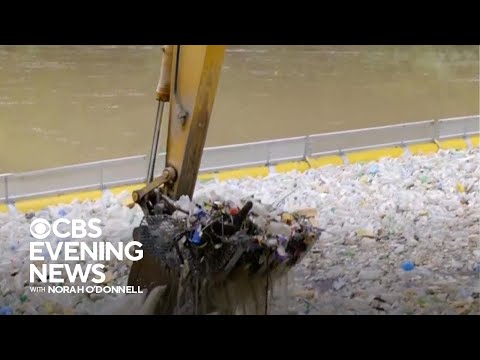
Riverine Plastic Collection Platform
Floating barriers and collection vessels that intercept plastic in Bangladesh's rivers before it reaches the sea.
The ask
Deploy a network of passive floating barriers and mechanised collection barges on Bangladesh's major river systems — Buriganga, Turag, Meghna — to intercept plastic waste before it enters the Bay of Bengal, then process and sell it as recovered feedstock.
Why now
Bangladesh is consistently ranked among the world's top plastic-polluting nations by river output. The Ocean Cleanup and similar projects have demonstrated barrier-and-collector technology at scale; the engineering is proven. Extended Producer Responsibility (EPR) regulation, drafted but stalled, is likely to pass in some form before 2027, creating a compliance market for verifiable plastic recovery credits. Plastic waste-to-feedstock prices have stabilised at $300–450/tonne globally for HDPE and PP.
Why Bangladesh
The country has over 700 rivers, and its flat delta geography means river flow is slow enough for barrier deployment — unlike fast Himalayan rivers where collection is impractical. Dhaka's Buriganga discharges an estimated 40,000 tonnes of plastic per year; intercept technology positioned 10–15 km downstream of the city can capture high concentrations before dilution. Plastic collection also creates immediate, visible public health improvements that generate political goodwill and potential municipal co-funding.
As a business
Revenue comes from selling recovered plastic to recyclers (HDPE, PP at ৳30,000–45,000/tonne), from plastic credit sales to brand owners under EPR schemes, and from municipal contracts where city corporations pay per tonne intercepted to meet waste-diversion targets. A partnership with a recycler or brand owner at the outset de-risks the offtake side before the first barrier is anchored.
Economics
Move the sliders to model your own riverine plastic collection operation. Defaults are order-of-magnitude estimates — pressure-testing them is part of what a founder pitches us.
Model a riverine plastic collection business
Clears its setup cost after ~18 months, then profit (volt) from there. Hover or tap the chart for any month.
Illustrative model — defaults are order-of-magnitude estimates from public data, not a forecast. Pressure-test every number before you build.
What AimHuge would back
A team that combines river engineering or maritime operations with a secured offtake agreement — we will not fund a collection business that plans to figure out buyers after deployment. Ideally the founder has navigated a municipal concession before and understands Bangladesh's river authority permitting.
Impact
Collecting 80 tonnes of river plastic per month — 960 tonnes/year — prevents that material from fragmenting into microplastics in the Bay of Bengal and supplies Bangladesh's domestic recycling sector with feedstock that displaces ~3,360 tCO₂e/year of virgin plastic production. Extended Producer Responsibility credits create a second revenue stream that aligns with global brand sustainability commitments. The Buriganga alone is estimated to discharge 40,000 tonnes of plastic per year; a commercial collection platform running at even 2% interception efficiency would be the largest river plastic recovery operation in South Asia.
Also being built elsewhere
Companies proving the model in other markets.
Helsinki-founded river plastic recovery company operating in seven countries including Bangladesh — direct comparable converting plastic to lumber boards.
Solar-powered autonomous collection barge removing 3 million+ kg from rivers — technology benchmark for mechanised river collection.
More Water ideas
Other climate businesses we want built.