ONE WORLD.
FIVE PORTS.
Every EV on the planet plugs into one of a handful of connectors — and they don't talk to each other. Here's what they are, where they came from, and what it takes to make a Chinese-built vehicle ready for the road anywhere else.
WHY PORTS
MATTER
A charging port is a political map. China, Europe, Japan, and North America each picked a different plug — and a vehicle built for one market can't charge in another without hardware changes. For an importer like Zeph, the port is the first question on every order sheet.
GB/T
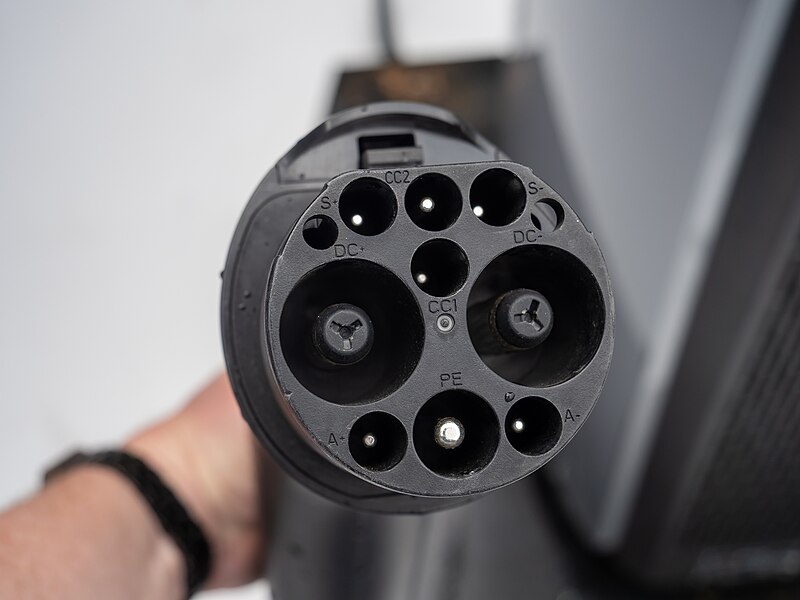
Published by the Standardization Administration of China in 2011 and revised in 2015, GB/T (Guóbiāo / Tuījiàn — "national recommended standard") is the mandatory connector on every EV sold domestically in mainland China. It comes in two forms: a 7-pin AC connector and a 9-pin DC connector that at a glance resembles a European Type 2, but is electrically incompatible.
Because China accounts for roughly 55–60% of new EV sales worldwide, GB/T is — by volume — the most common EV port on earth. Every BYD, Geely, Chery, Wuling, and most JV-made EVs roll off the line with GB/T sockets.
CCS2
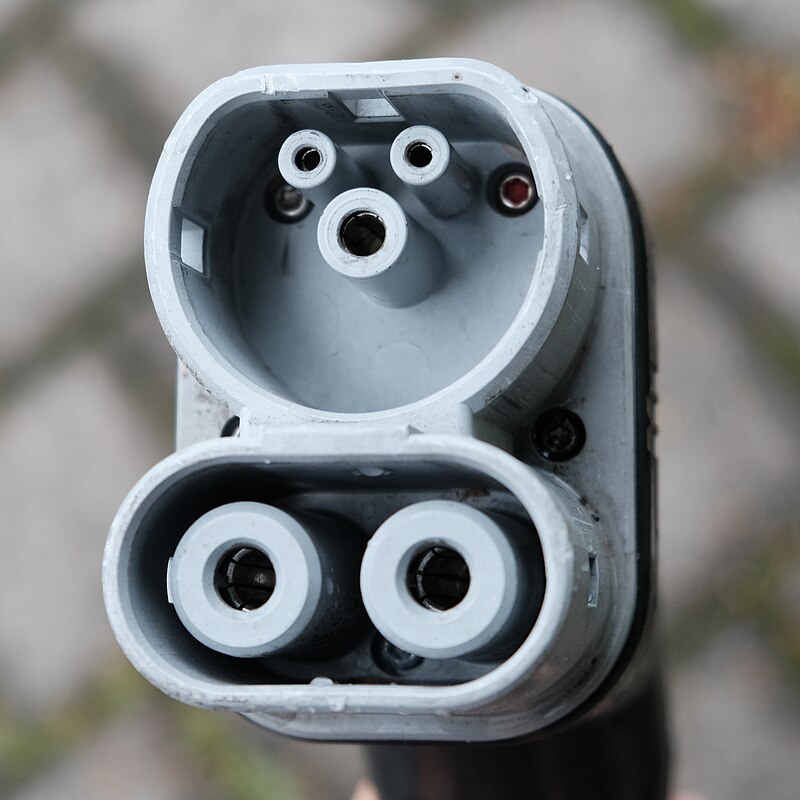
CCS2 was jointly developed by German and European automakers (VW, BMW, Mercedes, Audi, Porsche, Ford) and formalized as an IEC standard in 2014. It adds two fat DC pins below a standard Type 2 AC connector, so one socket handles everything from slow home AC charging to 350 kW ultra-fast DC.
CCS2 is now the mandated or de-facto standard in the EU, UK, Australia, New Zealand, India, the Middle East, and most of South America and Africa. It's the port you need on any vehicle destined for Zeph's core markets.
CHAdeMO
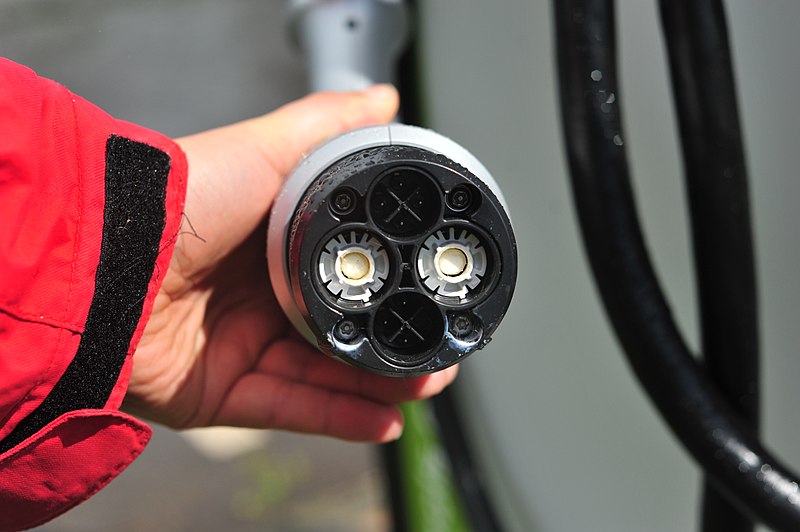
Short for "CHArge de MOve" — a play on the Japanese phrase "o cha demo ikaga desuka" ("how about a cup of tea?"), reflecting the length of a fast charge. Launched in 2010 by Tokyo Electric, Nissan, Mitsubishi, Fuji Heavy, and Toyota, CHAdeMO was the first DC fast-charging standard to reach commercial scale and shaped every standard that followed.
It lost the global standards war. Most non-Japanese automakers moved to CCS2 or NACS; the 2023 Nissan Ariya dropped CHAdeMO in favor of CCS in Europe and NACS in North America. The successor — ChaoJi / CHAdeMO 3.0 — is a joint CN/JP effort aimed at unifying with GB/T, but adoption outside legacy fleets is limited.
NACS
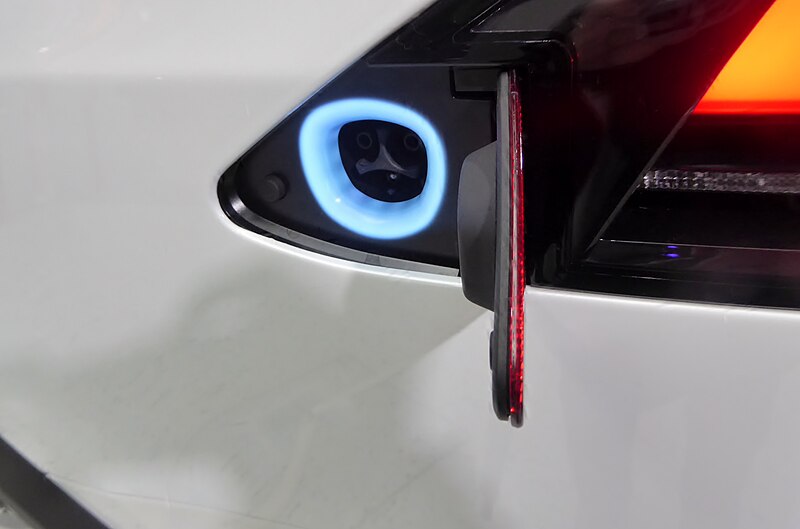
The North American Charging Standard started life as Tesla's in-house connector, launched with the Model S in 2012. Half the size of CCS1 and capable of handling both AC and DC through the same five pins, it was always mechanically elegant — but it was locked inside Tesla's ecosystem.
In late 2022 Tesla opened the spec. Within a year Ford, GM, Rivian, Hyundai-Kia, Honda, Toyota, Nissan, Mercedes, and Volvo had all signed on, and SAE ratified it as J3400 in 2023. From model-year 2025 onward most new North American EVs ship with NACS from the factory. CCS1 is now a legacy standard in the US market.
TYPE 2
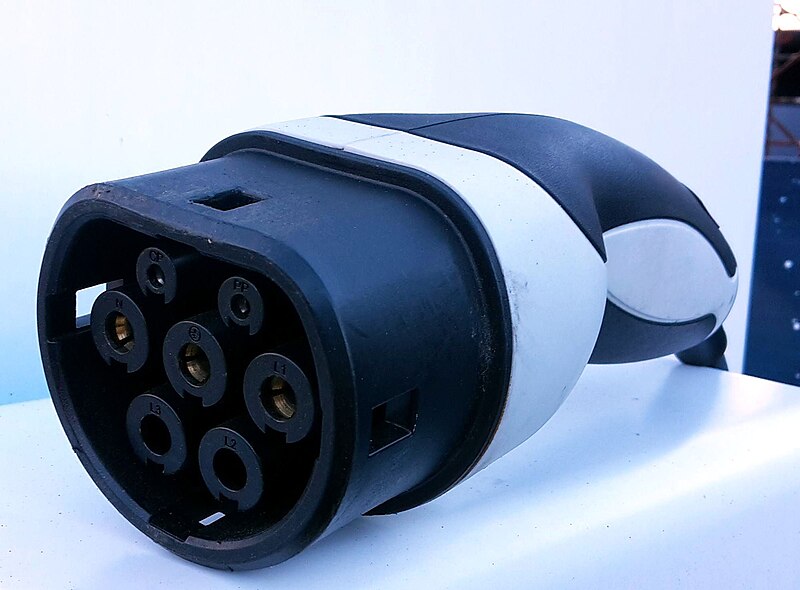
Developed in 2009 by German connector maker Mennekes for the EU's push toward a single AC charging standard. The seven-pin D-shaped port supports single-phase and three-phase AC, which matters in Europe where most domestic wiring is three-phase and can deliver up to 22 kW at home.
Type 2 is the AC half of CCS2 — every CCS2 socket is a Type 2 socket with two DC pins glued on below. Any EV with a CCS2 inlet can AC-charge from any Type 2 cable, which is why public AC charging in Europe, Australia, and increasingly South Asia is standardized around this connector.
WHAT YOU
ACTUALLY PAY FOR.
None of the five standards charge a per-vehicle royalty. You don't buy a licence to put a CCS2 port on a car any more than you buy a licence to use USB-C. What you do pay for is hardware, certification, and — if you want a seat at the standards table — industry-body membership.
All figures are indicative 2025–2026 tier-1 OEM pricing in USD. Real engineering cost sits not in the connector itself but in the charge-control firmware, isolation monitoring, and regional type-approval — a one-time NRE that amortises across every vehicle of that model.
Zeph'S
RECOMMENDATION.
CCS2
Bangladesh has no legacy fast-charging infrastructure to protect. That's a rare gift — it means the country gets to pick the right standard once, and skip the US / EU / JP decade of connector wars entirely.
CCS2 is the right pick. Here's why.
- 01Regional alignmentIndia — Bangladesh's largest neighbour and the anchor of any South Asian charging network — standardised on CCS2 via BIS IS 17017. Cross-border vehicle movement and shared charger design favour CCS2.
- 02One SKU, two marketsAustralia — Zeph's second market — also runs CCS2. Specifying CCS2 for Bangladesh lets Zeph order a single export SKU from Chinese OEMs instead of two, cutting MOQ risk and inventory cost.
- 03One port, every speedCCS2 covers single-phase 230 V home AC (the Bangladesh domestic norm), three-phase 400 V AC at commercial sites, and 50–350 kW DC fast charging — all through one inlet. No second cable, no "which port do I use" customer confusion.
- 04Infrastructure signalBangladesh's active car-DC operators — Crack Platoon (~25 sites), Mulytic Energy with Genex Infrastructure (1,000 points targeted by 2026), BYD Bangladesh Service, and Ekhon Charge — are specifying CCS2 as the primary gun. The multi-standard Chinese hardware they buy usually also exposes GB/T, but public CCS2 is where the network is actually growing.
- 05Future export optionalityCCS2-equipped vehicles can be exported or re-exported to the EU, UK, Middle East, Africa, and most of South America without a second retrofit. GB/T locks the fleet into China-compatible infrastructure only.
- 06Avoided standards riskCHAdeMO is a declining standard; NACS is North-America-only; Type 2 alone has no DC path. CCS2 is the only port that's both widely deployed today and still gaining share globally ex-China.
WHAT BANGLADESH
IS ACTUALLY
INSTALLING.
The network is small but the direction is set. As of mid-2025, roughly 14 sites are government-approved and around 114 are live across all private operators, with the largest networks deploying multi-standard DC hardware sourced from Chinese OEMs (Beny, XTECK, TKT) in the 60–150 kW band.
Stations
(Private + Public, Mid-2025)
Hardware Band
(Mulytic, by 2026)
Most DC hardware being installed is dual-gun (CCS2 + GB/T) from Chinese manufacturers — so a GB/T-only vehicle can physically plug into some public sites in Bangladesh. But the network's forward design, cross-border compatibility with Indian BIS-spec chargers, and AC-charging availability all tilt heavily toward CCS2. Figures reflect public reporting as of mid-2025; direction of travel is more reliable than any single count.
WHAT IT COSTS
TO SWAP
A PORT.
Almost every Chinese-built EV destined for Bangladesh, India, Australia, the EU, or the Middle East needs its GB/T port swapped to CCS2 before it's road-legal and customer-charger-compatible. Here's the typical picture at the factory gate — FOB China.
Figures are indicative market ranges for passenger EVs sourced from tier-1 Chinese OEMs in 2024–2026. Actual quotations depend on platform, volume, and whether the vehicle already has a CCS2-ready export SKU. The Zeph TCO calculator folds port retrofit into landed cost where relevant.
ONE COUNTRY.
ONE STANDARD.
ONE PLUG.
An open letter to the Prime Minister's Office asking the Government of Bangladesh to gazette CCS2 as the single national EV charging standard. Sign your name to future-proof every vehicle, every charger, every watt.
Read & sign the petition→Government of Bangladesh