Idea Bank — Request for Climate Startups
Beach Cleanup Machinery
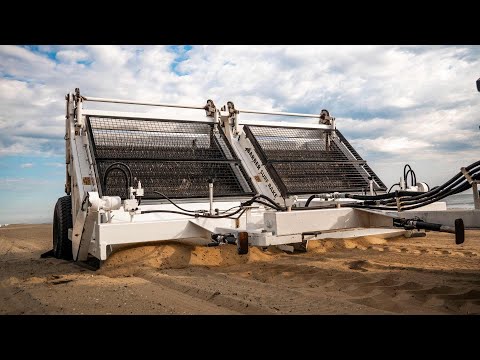
Tractor-mounted raking machines that clear plastic from Cox's Bazar at scale.
The ask
Manufacture or assemble tractor-mounted beach-raking units in Bangladesh, then sell or lease them to local government bodies, tourism operators, and NGOs along the 120 km Cox's Bazar coastline — turning daily manual litter collection into a mechanised service.
Why now
Manual beach cleaning at Cox's Bazar employs hundreds of daily labourers whose output barely keeps pace with tidal plastic deposits from the Bay of Bengal. Tourism pressure on the world's longest natural sea beach is rising; the Bangladesh Tourism Board and local municipality have both signalled willingness to pay for visible, photogenic cleanliness improvements. Tractor-towed beach rakes cost $8,000–15,000 (roughly ৳9–17 lakh) in Europe and are trivially reverse-engineerable by local fabricators in Chattogram.
Why Bangladesh
Cox's Bazar is ground zero: it receives an estimated 7,000+ tonnes of coastal plastic per year, driven by upstream river pollution and marine drift. The municipality's cleaning budget is already committed to labour; a single machine replaces 15–20 daily workers for the same annual cost and covers 10x the area. A second market is the Saint Martin's Island ferry corridor and emerging blue-economy coastal zones. Local steel fabrication capacity in Chattogram can build the chassis; only the nylon-mesh rake head and PTO coupling require imports.
As a business
Revenue comes from three channels: outright sale to municipalities (৳12–18 lakh per unit), annual maintenance contracts (৳1.5–2 lakh/unit/year), and a franchise cleaning service where the company operates machines on a per-kilometre contract for tourism concessions. Margin is highest on the service model — the machinery becomes a recurring-revenue asset rather than a one-time sale.
Economics
Move the sliders to model your own beach-cleaning fleet. Defaults are order-of-magnitude estimates — pressure-testing them is part of what a founder pitches us.
Model a beach-cleaning machinery business
Does not break even within 5 years at these inputs — adjust the sliders. Hover or tap the chart for any month.
Illustrative model — defaults are order-of-magnitude estimates from public data, not a forecast. Pressure-test every number before you build.
What AimHuge would back
A founder with a foot in Cox's Bazar municipality or the tourism concession ecosystem — someone who can land the first government pilot contract before the machine is finished. We'd fund a small Chattogram fabrication run of 3–5 units and the team to operate them, with the goal of a self-sustaining municipal service contract within 18 months.
Impact
Eight beach-cleaning units operating on Cox's Bazar cover up to 240,000 m² of beach per day, preventing an estimated 7,000 tonnes/year of coastal plastic from fragmenting and washing back into the Bay of Bengal. Each kg of recovered and recycled plastic displaces ~3.5 kg CO₂e of virgin plastic production — at 8 units collecting 500 kg/day each, the fleet avoids roughly 5,100 tCO₂e/year. A mechanised service replaces 15–20 daily-labour cleaners per unit while covering 10× the area, freeing scarce municipal budgets for broader coastal resilience investments.
Also being built elsewhere
Companies proving the model in other markets.
60-year-old tractor-towed beach cleaner leader supplying municipalities worldwide — validates the buy/lease-to-municipality model.
Tractor-towed machines cleaning 30,000 m²/hour for resorts and municipalities — exportable design easily reverse-engineered for local BD fabrication.
More Water ideas
Other climate businesses we want built.