Idea Bank — Request for Climate Startups
Rainwater Banking for Drought Resilience
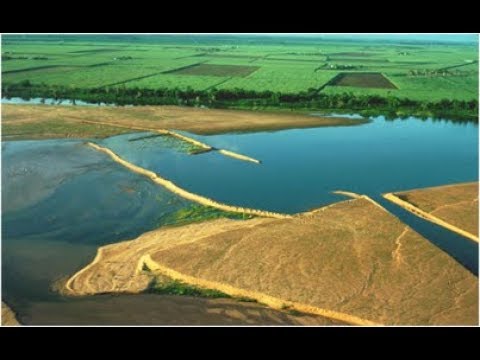
Underground cisterns and recharge wells that store monsoon rain for dry-season irrigation and drinking water.
The ask
Deploy engineered rainwater banking systems — subsurface cisterns, sand dams, and managed aquifer recharge (MAR) wells — in Bangladesh's drought-prone northwestern districts, selling water access to farming cooperatives and municipal utilities as a climate-resilience service.
Why now
The Barind Tract in Rajshahi-Chapai is experiencing acute groundwater depletion — tube-well water tables have dropped 5–10m in 20 years — while the same region receives 1,400mm of annual rainfall, nearly all in a 4-month monsoon window. The technology for low-cost managed aquifer recharge is well-established in India (Maharashtra, Rajasthan); portable, pre-fabricated cistern systems are commercially available. Climate adaptation finance is available from the Bangladesh Climate Change Trust Fund and multilateral sources specifically for water security.
Why Bangladesh
The northwest faces a paradox: extreme flooding in June–September and severe drought in January–April on the same land, separated by months. The Barind area has 700,000 hectares of agricultural land dependent on boro rice irrigation; groundwater-dependent irrigation pumps run 3–4 months per year at enormous energy cost. Capturing and recharging even 20% of local monsoon rainfall would dramatically reduce pump demand and arsenic exposure (over-extraction draws arsenic-laden deeper groundwater). The government's water-security priority programs provide a public-procurement channel.
As a business
Revenue models layer: design-and-build contracts for government and NGO clients (per-cistern pricing at ৳8–25 lakh depending on scale); O&M service contracts on installed systems (annual fee of 8–12% of capex); and a water credit or irrigation service fee from cooperative users who pay per cubic meter of stored water accessed. In drought years, stored water commands a strong price premium over depleted well access.
Economics
Move the sliders to model your own rainwater banking business. Defaults are order-of-magnitude estimates — pressure-testing them is part of what a founder pitches us.
Model a rainwater banking business
Clears its setup cost after ~4 months, then profit (volt) from there. Hover or tap the chart for any month.
Illustrative model — defaults are order-of-magnitude estimates from public data, not a forecast. Pressure-test every number before you build.
What AimHuge would back
A civil-engineering founder with existing government or NGO relationships in the northwest who can convert the proven Indian MAR model to Bangladeshi hydrogeology. The ideal first milestone is a demonstration catchment with published water-table recovery data — that de-risks the technology claim and unlocks multilateral climate-adaptation grant co-financing.
Impact
Each managed aquifer recharge system installed in the Barind Tract reduces dependence on deep tube-well extraction, cutting diesel pump energy use by 30–50% and lowering arsenic exposure risk from over-pumped deep aquifers — benefits shared by the ~700,000 hectares of boro rice farmland in the northwest. At 40 systems per year, the business avoids approximately 480 tCO₂e annually from reduced diesel pumping while retaining ~$360,000 of FX that would otherwise fund imported diesel. Groundwater recharge also sustains agricultural productivity through April droughts, protecting food security for millions of people dependent on the Barind's boro rice crop.
Also being built elsewhere
Companies proving the model in other markets.
Commercial rainwater harvesting and aquifer recharge firm with projects in Rajasthan — closest geographic and hydrological analogue to BD's Barind Tract.
Modular polymer-based rainwater harvesting systems for agriculture and municipalities — lightweight system design replicable in Bangladesh's flat northwest.
More Water ideas
Other climate businesses we want built.