Idea Bank — Request for Climate Startups
Mangrove Restoration & Carbon Credits
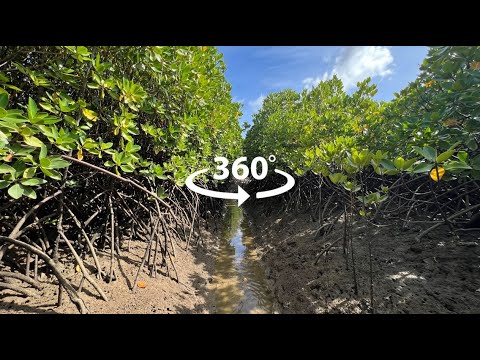
Restore coastal mangroves in Bangladesh for carbon credits, coastal protection, and community livelihoods.
The ask
Develop a community-managed mangrove restoration business in Bangladesh's coastal belt — monetising carbon credits (blue carbon), coastal protection services, and fisheries recovery — using Madagascar's Tahiry Honko project as the operational template.
Why now
Blue carbon (mangrove/seagrass) credits now command $15–50/tonne CO₂e on voluntary markets — 3–5× the price of terrestrial forestry credits — because mangroves sequester carbon at 5–10× the rate per hectare of tropical forest and the scientific methodology (VM0033) is verified by Verra. Conservation International's Madagascar work demonstrated that community tenure + REDD+ structure can generate verifiable credits at scale. The Bangladesh Forest Department launched a National Mangrove Restoration Plan in 2023 that creates the regulatory opening.
Why Bangladesh
Bangladesh lost an estimated 50% of its mangrove cover outside the Sundarbans in the last 40 years to aquaculture and embankment construction. The remaining degraded coastal fringe — roughly 150,000 hectares — is technically restorable. Cyclone damage to unprotected coastlines costs Bangladesh ~$2–3 billion per decade; a mangrove buffer reduces storm surge by 50–70%. Local fishing communities have direct economic incentive to protect restored areas because fish nursery biomass recovers within 3–5 years of replanting.
As a business
Revenue comes from three streams: voluntary carbon credit sales (primary), co-payments from coastal municipalities for storm-protection services (secondary), and fisheries licensing fees from communities on restored areas (tertiary). The business develops the methodology, structures community land agreements, manages planting and monitoring, and aggregates credits for sale to corporate buyers. Margin is highest on carbon: at 500 tonnes CO₂e/ha/year × 200 ha × $25/tonne, annual gross revenue reaches ~$2.5 million once credits are verified.
Economics
Move the sliders to model your own mangrove carbon business. Defaults are order-of-magnitude estimates — pressure-testing them is part of what a founder pitches us.
Model a mangrove carbon credit project
Does not break even within 5 years at these inputs — adjust the sliders. Hover or tap the chart for any month.
Illustrative model — defaults are order-of-magnitude estimates from public data, not a forecast. Pressure-test every number before you build.
What AimHuge would back
A founder with carbon market credentials (VCS/Gold Standard methodology experience) who has already secured community land agreements on at least 50 hectares and is working with the Bangladesh Forest Department. We want a company, not an NGO — the business model must stand on carbon revenue alone, with community payments and fisheries as upside. Co-investment with a biodiversity or blue-carbon specialist fund is expected.
Impact
Restoring 200 hectares of degraded coastal mangrove at 8 tCO₂e/ha/year sequesters 1,600 tCO₂e annually — at voluntary market prices of $25/tonne, that is $40,000/year in blue carbon revenue on top of fisheries recovery and coastal protection services. Mangrove restoration reduces storm-surge intensity by 50–70%, protecting communities and infrastructure against cyclones that cost Bangladesh $2–3 billion per decade in damage. Each hectare restored supports 3–5 tonnes of additional annual fish biomass within 3–5 years, directly raising incomes for coastal fishing families who have an economic incentive to protect the restored area.
Also being built elsewhere
Companies proving the model in other markets.
8,750 ha mangrove carbon project — first VERRA VM0033 certification in Asia; community-tenure model directly replicable in Bangladesh's Sundarbans fringe.
Blue carbon initiative since 2018 — demonstrates voluntary credit sales at $15–50/tCO₂e and operational template for community-managed restoration.
First project to use Verra's digital VM0033 pipeline — proves streamlined certification path that reduces time-to-first-credit.
More Water ideas
Other climate businesses we want built.