Idea Bank — Request for Climate Startups
Coastal Desalination Wells
Low-energy desalination systems supplying freshwater to saline-intrusion-affected coastal Bangladesh.
The ask
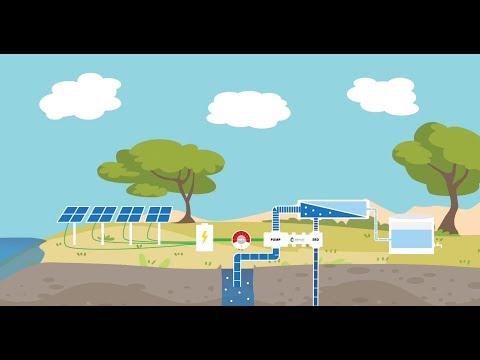
Deploy small-scale, solar-powered reverse-osmosis desalination units serving clusters of coastal villages where freshwater wells have been compromised by saline intrusion — selling water at a price below the current cost of trucked or boat-delivered fresh water.
Why now
Saline intrusion into coastal Bangladesh's groundwater has accelerated sharply — the Bangladesh Water Development Board estimates 20 million people lack reliable access to fresh water within 5 km of their home in coastal districts. Solar PV costs have fallen 80 % in a decade, making solar-powered RO economically viable at village scale for the first time. The WHO and UNICEF Joint Monitoring Programme has identified Bangladesh's coastal freshwater gap as one of the highest-priority unmet water access challenges globally, directing significant bilateral donor funding.
Why Bangladesh
Khulna, Satkhira, Bagerhat, and Barguna districts have the most acute saline intrusion problem in Asia outside of Pacific islands — hundreds of villages rely on rainwater harvesting or costly trucked water during the dry season. Current coping cost for a household is ৳500–2,000/month on bottled or delivered water. A solar RO unit serving 200 households could supply water at ৳150–250/household/month, cutting cost by 50–80 % while generating operating surplus. The government's Delta Plan 2100 explicitly earmarks freshwater security as a funded priority.
As a business
The model is water-as-a-service: deploy and own the desalination unit, charge a monthly household subscription (৳150–250/month per household), and recover capital over 5–7 years. Installation is grant-co-funded in the first tranche via UNDP, World Bank, or bilateral donors; revenue from water sales pays for O&M and subsequent deployments without grant dependency. A cluster of 10 units serving 2,000 households generates ৳30–50 lakh per year in recurring revenue.
Economics
Move the sliders to model your own coastal desalination deployment. Defaults are order-of-magnitude estimates — pressure-testing them is part of what a founder pitches us.
Model a coastal desalination water service
Does not break even within 5 years at these inputs — adjust the sliders. Hover or tap the chart for any month.
Illustrative model — defaults are order-of-magnitude estimates from public data, not a forecast. Pressure-test every number before you build.
What AimHuge would back
A founder with water-engineering or public-health credentials who has deployed at least one pilot unit with 6+ months of operational data — water quality, uptime, collection rate. We want to see a specific coastal district partnership (union parishad, NGO, or DPHE) and a realistic unit-economics model that accounts for membrane replacement cycles and the challenge of fee collection in low-income communities.
Impact
Ten solar RO units each serving 200 households eliminate the need for trucked or boat-delivered fresh water that costs 50–80% more and is transported using diesel — avoiding roughly 200 tCO₂e/year in fuel combustion at the 10-unit deployment level. The 20 million Bangladeshis without reliable coastal freshwater access represent a vast market for a water-as-a-service model that cuts household water expenditure by half while generating recurring revenue. Domestic solar-powered production eliminates imported fossil fuel dependence in remote coastal communities, retaining an estimated $180,000/year of FX at a 10-unit fleet scale.
Also being built elsewhere
Companies proving the model in other markets.
Solar-driven decentralised RO serving coastal island communities at $1.3/m³ versus $6/m³ for trucked water — same model as the BD proposal.
Containerised solar RO units producing 5–100 m³/day for remote coastal communities — plug-and-play format suited to BD char islands.
Water-as-a-service solar desalination model for off-grid communities — same PAYG financing structure proposed for BD coastal deployment.
More Water ideas
Other climate businesses we want built.