Idea Bank — Request for Climate Startups
UV-Degraded Plastic Recycling
Pre-treat UV-damaged outdoor plastics that standard recyclers reject into usable pellets.
The ask
Develop a pre-treatment and blending process — combining UV stabiliser additives, compatibilisers, and controlled re-extrusion — that converts UV-degraded polypropylene and polyethylene waste (tarps, fishing nets, agricultural film, signage) into specification-grade recycled pellets for injection moulding.
Why now
Conventional mechanical recyclers reject UV-degraded plastics because the embrittled polymer chains produce brittle output — this creates a clean, largely unclaimed feedstock category priced at near-zero. Academic work on re-stabilisation using hindered amine light stabilisers (HALS) and reactive extrusion is well-published and moving toward commercial application. Meanwhile, EPR (Extended Producer Responsibility) regulations being drafted in Bangladesh will soon require producers to take back a percentage of their packaging — creating a compliance pull for any certified recycler.
Why Bangladesh
Bangladesh uses enormous volumes of woven PP tarps (for flood protection, construction sheeting, and market stalls), polypropylene fishing nets across the Bay of Bengal coastline, and LDPE agricultural mulch film — all of which UV-degrade rapidly in the tropical climate and are currently landfilled or burnt. The country's large plastics conversion industry (chairs, crates, pipe fittings) is a ready domestic buyer for affordable recycled pellets if quality consistency can be guaranteed.
As a business
Feedstock is acquired at near-zero or negative cost (tipping fees from net collection drives, BRAC partnerships for tarp buybacks). The value-add is the pre-treatment step — a twin-screw reactive extruder with inline additive dosing — which lifts the pellet value from ৳15/kg (generic mixed plastic) to ৳55–80/kg (specification PP or HDPE compound). Selling directly to injection moulders on a 3-month rolling supply contract locks in offtake and enables volume planning.
Economics
Move the sliders to model your own UV-plastic recycling line. Defaults are order-of-magnitude estimates — pressure-testing them is part of what a founder pitches us.
Model a UV-plastic re-stabilisation line
Clears its setup cost after ~20 months, then profit (volt) from there. Hover or tap the chart for any month.
Illustrative model — defaults are order-of-magnitude estimates from public data, not a forecast. Pressure-test every number before you build.
What AimHuge would back
A founder with a materials science or polymer engineering background who has run extrusion trials on UV-degraded feedstock and can show a pellet quality certificate from a credible test lab. We want a named injection-moulding buyer willing to trial the output — that de-risks the commercial side of what is still an emerging process.
Impact
Bangladesh's PP tarp, fishing-net, and agricultural-film streams are estimated at 200,000+ tonnes/year, almost all currently unrecyclable by conventional mechanical recyclers due to UV embrittlement — effectively a zero-cost, unclaimed feedstock. A re-stabilisation line processing 1,500 kg/day converts this waste into specification-grade pellets at ৳65/kg, displacing virgin PP imports worth roughly $1.1 million/year at default scale. Each tonne of virgin PP displaced avoids approximately 2 t CO₂e; the default line avoids ~900 t CO₂e/year. The key systemic impact is opening a new recycling category: once re-stabilisation is commercially proven in Bangladesh, it unlocks hundreds of thousands of tonnes of previously unrecyclable plastic across South Asia.
Also being built elsewhere
Companies proving the model in other markets.
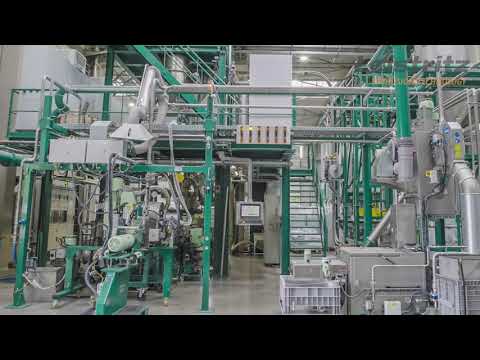
Commercial plastic pelletizing operation using additive compounding — demonstrates the extruder-plus-masterbatch model that is the core technical process for UV-plastic re-stabilisation.
Recycled plastic compounds manufacturer incorporating stabiliser additives into recycled pellets for construction and extrusion markets — validates the specification-grade additive-compounding route.
More Circular Materials ideas
Other climate businesses we want built.