Idea Bank — Request for Climate Startups
Fermented Food-Waste Fish Feed
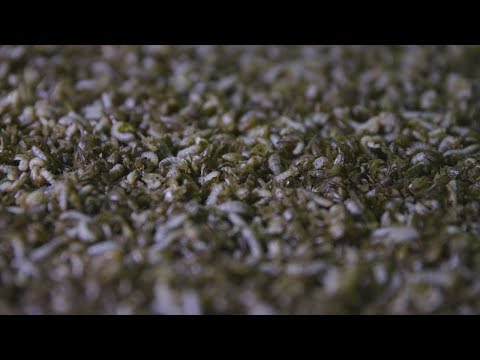
Ferment urban food waste into low-cost fish feed, cutting aquaculture input costs.
The ask
Collect organic food waste from Dhaka's wet markets, restaurant clusters, and food-processing factories, ferment it into a nutritionally-validated fish-feed ingredient, and sell it to aquaculture farmers at 20–30 % below the cost of conventional soya-fishmeal feed.
Why now
Fishmeal prices have doubled globally since 2020 on the back of anchovy catch collapses; Bangladeshi aquaculture farms, which consume roughly 1.5 million tonnes of feed per year, are being squeezed. Black Soldier Fly (BSF) and lactic-acid fermentation are both proven at small scale for converting food waste to feed ingredients. Dhaka's wet markets and food-processing clusters generate an estimated 2,000 tonnes of organic waste daily, almost none of which is valorised. Bangladesh's aquaculture sector — the world's fifth-largest — is a captive, price-sensitive market.
Why Bangladesh
Bangladesh produces 4.7 million tonnes of fish per year, the vast majority from pond aquaculture. Feed costs account for 60–70 % of total production cost for tilapia and pangasius farmers. Dhaka alone generates enough organic waste to supply several medium-scale fermentation plants. Municipal waste collection contracts or tipping fees from wet-market operators can make feedstock free or even paid-for. The Department of Fisheries has been actively seeking lower-cost feed solutions since the 2022–23 fishmeal price spike.
As a business
The model is a two-sided feedstock business: collect waste at zero or negative cost (earn a tipping fee from wet markets), ferment and dry it at a central facility, and sell the resulting feed ingredient at ৳35–50 per kg versus ৳70–90/kg for imported fishmeal. Direct farm sales and co-operative distribution eliminate the middleman. Biogas captured from the fermentation process offsets facility energy costs by 20–30 %.
Economics
Move the sliders to model your own food-waste fish feed plant. Defaults are order-of-magnitude estimates — pressure-testing them is part of what a founder pitches us.
Model a fermented fish-feed plant
Does not break even within 5 years at these inputs — adjust the sliders. Hover or tap the chart for any month.
Illustrative model — defaults are order-of-magnitude estimates from public data, not a forecast. Pressure-test every number before you build.
What AimHuge would back
This is our highest-conviction idea in this batch. We want a founder with food-science or biochemistry expertise who has run a fermentation trial and has nutritional assay data. A secured waste-supply agreement with one wet-market operator and a trial order from one fish farm would be enough for us to engage seriously. The business has genuine defensibility through feedstock contracts and process know-how.
Impact
Conventional fishmeal production emits approximately 2.0–2.5 kg CO₂e per kg; lactic-acid fermentation of food waste produces an equivalent protein ingredient at roughly 0.3 kg CO₂e per kg — a 7× carbon intensity reduction. At 30 tonnes per month (360 tonnes/year) of fermented feed ingredient, the business avoids roughly 630 tCO₂e annually compared with the fishmeal it displaces. Bangladesh imports roughly $80 million of fishmeal per year — every tonne of domestic fermented feed produced saves approximately $1,800 in import cost, retaining hard currency in the aquaculture supply chain. Diverting Dhaka's 2,000 tonnes/day of organic waste from open-air rotting (which emits methane at a global warming potential of 28×CO₂) adds a further avoided-methane benefit: capturing 30 tonnes/month for fermentation prevents roughly 30 tCO₂e/month in landfill and open-burning methane emissions.
Also being built elsewhere
Companies proving the model in other markets.
Fermentation-based valorisation of agri-food by-products into high-protein animal feed; the closest bioprocess analogue.
Start-up converting aquaculture wastewater nutrients into fish feed via microalgae; proves the circular waste-to-feed model in a tropical aquaculture context.
More Circular Materials ideas
Other climate businesses we want built.