Idea Bank — Request for Climate Startups
3D-Printed Injection Molds
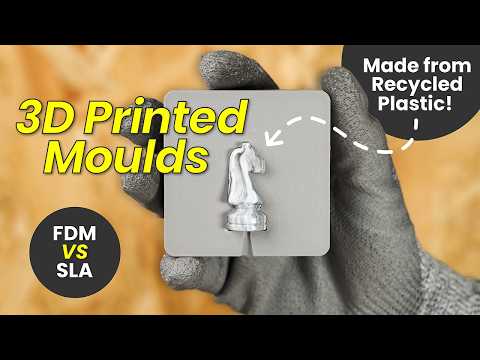
3D-print low-cost mold inserts so village recyclers can produce finished plastic parts on demand.
The ask
Build a service bureau that designs, prints, and supplies 3D-printed injection mould inserts to small plastic recyclers and community fabrication workshops in Bangladesh, enabling on-demand production of finished goods from recycled feedstock without industrial tooling investment.
Why now
Fused-deposition and resin-based 3D printers capable of producing injection-mould inserts rated for 500–2 000 shots are now available for under USD 1 000 — within reach of an urban fab-lab. Bangladesh's maker and engineering communities (BUET, SUST, Dhaka Fab Lab) have the 3D printing skills. The combination of low-cost desktop injection moulders (Precious Plastic style) and printable mould inserts removes the final barrier — tooling cost — from village-scale plastic recycling.
Why Bangladesh
Bangladesh generates abundant recycled PP and HDPE flake but most of it leaves the country as raw granulate because local processors can't afford finished-goods tooling. A mould library of 30–50 common products (cups, brackets, tile spacers, plant pots, educational toys) translates collected plastic directly into retail-priced goods. The service bureau can sit in Dhaka and ship printed mould inserts nationwide by courier within 48 hours.
As a business
Revenue from mould design (৳5 000–25 000 per custom design) and mould print-and-supply (৳800–3 000 per insert depending on size and resin). A subscription mould-library model — monthly fee for access to 50+ standard designs — adds recurring revenue. The bureau also earns on filament and resin supply to repeat customers. Gross margin on print-and-supply is 60–75 % once equipment is paid off.
Economics
Move the sliders to model your own 3D-printed mould bureau. Defaults are order-of-magnitude estimates — pressure-testing them is part of what a founder pitches us.
Model a 3D-printed mould service bureau
Clears its setup cost after ~4.7 years, then profit (volt) from there. Hover or tap the chart for any month.
Illustrative model — defaults are order-of-magnitude estimates from public data, not a forecast. Pressure-test every number before you build.
What AimHuge would back
A design-and-fabrication founder who has already completed 10–20 paying mould orders and has documented throughput and failure rates. We want to see the mould library — what products are being made, who is buying, what the repeat-order rate is. Seed funding to build out the library to 50 standard designs and equip a second production site.
Impact
By enabling village-scale recyclers to convert raw PP/HDPE flake into finished goods rather than exporting raw granulate, each active mould library client diverts roughly 1–3 tonnes of plastic from landfill or open burning per month — each tonne of plastic burned releases ~2.9 tCO₂e. At 100 active clients nationally, the network keeps an estimated 3 500 tonnes of plastic in productive use annually while eliminating the FX cost of importing equivalent moulded goods. Every service bureau employs 3–6 designers and machine operators, seeding a skilled-trades pipeline in university-adjacent maker communities. Bangladesh imported over $400 m of plastic articles in 2023; a mould-library model chips away at that import bill from the bottom up.
Also being built elsewhere
Companies proving the model in other markets.
More Circular Materials ideas
Other climate businesses we want built.