Idea Bank — Request for Climate Startups
Recycled Plastic Interlocking Bricks
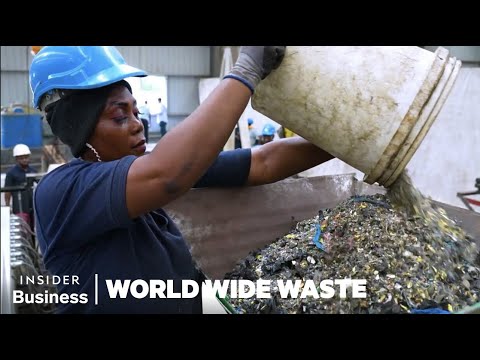
Waste plastic turned into LEGO-style construction bricks, displacing fired-clay bricks in BD.
The ask
Build a manufacturing business that converts Bangladesh's municipal and industrial plastic waste into interlocking LEGO-style construction bricks, selling them as a low-cost, mortar-free building material to the housing and construction sector — directly displacing fired-clay bricks that account for a significant share of the country's air pollution and coal consumption.
Why now
The Indian proof point (Rebricks and similar startups) has validated both the manufacturing process and the market acceptance. Bangladesh's brick sector is now under direct regulatory pressure: the Brick Kiln Control Act is being enforced more stringently in Dhaka division, and the government's Sustainable and Renewable Energy Development Authority has a financial incentive programme for brick kilns that convert. Simultaneously, Bangladesh generates an estimated 3 million tonnes of plastic waste annually with virtually no formal recycling infrastructure — the feedstock is free or near-free.
Why Bangladesh
Bangladesh is one of the world's most brick-intensive construction markets: the country produces roughly 23 billion bricks per year, consuming 7 million tonnes of coal and generating air pollution that puts Dhaka consistently in the top five most polluted cities globally. Plastic waste floods urban and rural areas with no collection system, making tipping-fee or zero-cost feedstock realistic. The interlocking design eliminates the need for cement mortar — critical in a market where skilled masonry labour is increasingly scarce as workers move to the Gulf.
As a business
The company earns on the material spread: plastic waste costs ৳5–15/kg to collect and process; a finished brick equivalent (by construction value) costs ৳12–20 to produce and sells for ৳22–35. Volume is the game — a single mid-size plant processing 10 tonnes of plastic per day produces roughly 300,000 brick-equivalents daily. The second revenue line is carbon credits: each tonne of plastic diverted from open burning generates approximately 2.5 tonnes of CO₂ equivalent avoided, monetisable through the voluntary carbon market at USD 8–20/tonne.
Economics
Move the sliders to model your own plastic brick plant. Defaults are order-of-magnitude estimates — pressure-testing them is part of what a founder pitches us.
Model a recycled plastic brick plant
Clears its setup cost after ~0 months, then profit (volt) from there. Hover or tap the chart for any month.
Illustrative model — defaults are order-of-magnitude estimates from public data, not a forecast. Pressure-test every number before you build.
What AimHuge would back
We want a founder who has produced a structural test batch that meets BNBC compressive strength requirements, and who has a construction company or developer committed to a pilot project. The regulatory tailwind on brick kilns is real but slow — the right team does not wait for kiln bans to drive demand; they lead with the mortar-free installation speed as the primary selling point to contractors.
Impact
Bangladesh's 23 billion annual fired-clay bricks consume roughly 7 million tonnes of coal and emit an estimated 15–17 million tCO₂e per year — the country's single largest source of air-pollution-related mortality. Each tonne of plastic waste converted into interlocking bricks replaces approximately 800 fired-clay brick equivalents, avoiding 240 kg of coal consumption and 0.24 tCO₂e in kiln emissions; simultaneously, every tonne of plastic diverted from open burning (its typical fate in Bangladesh) prevents a further 2.5 tCO₂e. At 200,000 bricks per day (300 operating days), this plant processes roughly 9 tonnes of plastic daily and avoids approximately 8,500 tCO₂e per year from combined kiln displacement and plastic-burning prevention. Plastic feedstock collected from urban streams and rivers also generates measurable biodiversity co-benefits that can be bundled into blue-carbon or plastic-credit programmes.
Also being built elsewhere
Companies proving the model in other markets.
Nzambi Matee's start-up converting mixed plastic waste into pavers 5× stronger than concrete; the direct proof-of-concept in a comparable emerging-market context.
Converts 100% plastic waste (including ocean plastic) into construction blocks with no additives; shows the pathway to scaling with institutional plastic-credit finance.
More Circular Materials ideas
Other climate businesses we want built.