Idea Bank — Request for Climate Startups
Urban Vertical Mushroom Farms
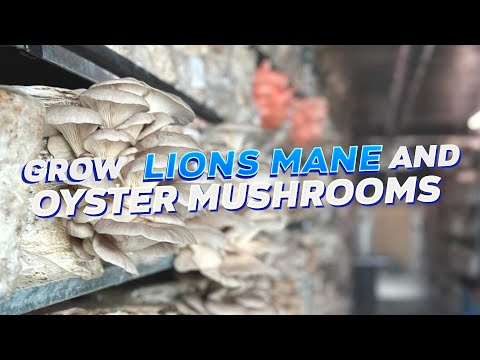
Stack mushroom cultivation inside unused urban structures using waste substrate for zero-land food production.
The ask
Build a vertical mushroom farm inside repurposed urban structures — unused floor space in industrial buildings, columns in parking structures, or purpose-built stacked racks — using agricultural waste substrate (rice straw, sawdust, jute waste) to produce oyster, shiitake, and lion's mane mushrooms for Dhaka's premium food market.
Why now
Dhaka's premium fresh food market is growing at 15–20% per year driven by a growing upper-middle-class consumer base and a proliferation of modern-trade grocery retail (Shwapno, Meena Bazar, Chaldal). Oyster mushrooms sell for ৳250–450/kg in Dhaka, against a production cost of ৳80–120/kg using waste substrate — a 3–4× margin that makes small-footprint vertical farming viable. Indoor mushroom cultivation has no seasonality; it produces a harvestable crop every 45–60 days regardless of monsoon or temperature.
Why Bangladesh
Bangladesh generates enormous volumes of mushroom substrate — rice straw (50 million tonnes/year), jute waste, and sawdust from furniture manufacturing — most of which is burned. Dhaka has severe land scarcity; a 500 m² warehouse floor can produce 2–3 tonnes/month of mushrooms, equivalent in protein yield to 5+ hectares of paddy. The country imports essentially all of its shiitake and specialty mushrooms from China and India, paying a significant logistics premium. A domestic producer with consistent quality can undercut imports and command a freshness premium simultaneously.
As a business
Sell to three channels: premium supermarket chains (highest price, net-30 payment), restaurant and hotel kitchens (recurring bulk orders), and direct-to-consumer weekly subscription boxes. The subscription box is the flywheel: it generates upfront cash flow, trains consumer habits, and is the cheapest marketing channel. Dried mushroom export (lion's mane, shiitake) is the medium-term upside: dehydrated specialty mushrooms fetch ৳3,000–8,000/kg and air-freight well.
Economics
Move the sliders to model your own urban mushroom farm. Defaults are order-of-magnitude estimates — pressure-testing them is part of what a founder pitches us.
Model an urban vertical mushroom farm
Does not break even within 5 years at these inputs — adjust the sliders. Hover or tap the chart for any month.
Illustrative model — defaults are order-of-magnitude estimates from public data, not a forecast. Pressure-test every number before you build.
What AimHuge would back
A founder who has already completed at least two full production cycles with documented yield data and has a committed supermarket or restaurant buyer. We want the operator who treats substrate sourcing and spawn supply as strategic assets — the low-quality-spawn problem has killed more mushroom startups than any other single factor. A food safety certification plan (BSTI) from day one is non-negotiable for the modern-trade channel.
Impact
Mushroom cultivation on rice straw diverts a substrate that is otherwise burned in the field — Bangladesh generates 50 million tonnes of rice straw per year, and open burning emits roughly 1.5 kg CO₂e per kg of straw. A 300 m² farm consuming 15 tonnes of straw per month prevents approximately 270 tCO₂e per year in avoided field burning. Mushrooms also deliver 15–25 g of protein per 100 g dry weight, making each kilogram of oyster mushrooms nutritionally equivalent to 0.3 kg of chicken — with a carbon footprint roughly 40× lower. Displacing imported Chinese and Indian dried shiitake (which air-freights at 5–8 kg CO₂e/kg) with locally grown product cuts the food-system carbon footprint of Bangladesh's growing premium food market. The substrate-to-food conversion creates 12–15 direct jobs per 300 m² farm, concentrated in urban areas where formal employment for low-skilled workers is scarce.
Also being built elsewhere
Companies proving the model in other markets.
Pioneered the urban waste-substrate mushroom farm model — converting coffee grounds in a repurposed office into oyster mushrooms; the low-tech urban farm proof-of-concept.
NYC's first certified organic commercial mushroom farm; distributed urban-farm model supplying Whole Foods — proves supermarket-to-farm supply chain in a dense city.
More Circular Materials ideas
Other climate businesses we want built.