Idea Bank — Request for Climate Startups
Cardboard Honeycomb Panels
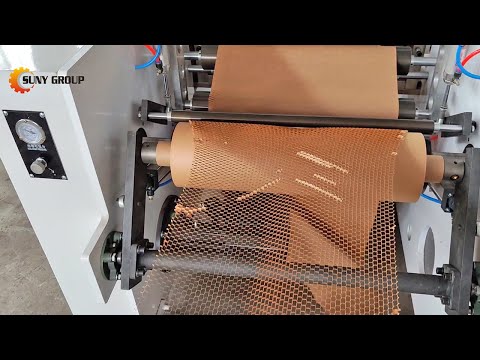
Waste cardboard converted into lightweight honeycomb panels for packaging and construction fill.
The ask
Set up a factory that takes waste corrugated cardboard — abundant from Bangladesh's garment export packing lines — and converts it into honeycomb core panels used as lightweight packaging insert, door fill, and interior construction material, replacing virgin wood, polystyrene, and solid cardboard at lower cost.
Why now
Honeycomb panel technology is mature and machinery is off-the-shelf; Chinese and Indian suppliers sell entry-level production lines for ৳25–60 lakh. Global demand for sustainable packaging is driving garment brands to mandate recyclable, low-weight void fill — cardboard honeycomb scores better than expanded polystyrene on every ESG metric they report. The EU's Packaging and Packaging Waste Regulation (effective 2030) is forcing brands to eliminate single-use plastic packaging, and Bangladesh's 4,500 garment factories are scrambling to find compliant alternatives.
Why Bangladesh
Bangladesh's garment sector generates hundreds of thousands of tonnes of corrugated cardboard waste annually — bale prices are ৳8–15 per kg, far below the ৳30–55 per kg a finished honeycomb panel commands. Factories are already paying to dispose of it. The domestic furniture industry (notably Otobi, Hatil) already uses honeycomb door-fill in large volumes but sources from India or China; a local supplier within 50 km of Dhaka would displace import costs and lead times. The same panel sells to construction interiors as lightweight partition fill.
As a business
The plant buys waste cardboard at ৳10–14 per kg from garment factory aggregators and sells finished honeycomb panels at ৳55–90 per kg equivalent, delivering gross margins around 60–70% before energy and labour. Customers are furniture manufacturers (high volume, contracted), garment exporters needing compliant void fill (spot and contract), and the construction sector. A single 2-shift factory with a ৳50 lakh investment can process 8–12 tonnes of waste per day and operate near full utilisation within 12 months if sales are pre-seeded with one or two anchor B2B contracts.
Economics
Move the sliders to model your own cardboard honeycomb panel plant. Defaults are order-of-magnitude estimates — pressure-testing them is part of what a founder pitches us.
Model a cardboard honeycomb panel plant
Clears its setup cost after ~1 months, then profit (volt) from there. Hover or tap the chart for any month.
Illustrative model — defaults are order-of-magnitude estimates from public data, not a forecast. Pressure-test every number before you build.
What AimHuge would back
We want a founder with manufacturing operations experience and at least one confirmed B2B offtake partner before they raise — a furniture company or an export-oriented garment factory that has committed to trial orders. The business is not technically complex; the risk is entirely sales and logistics execution. A founder who has spent time inside the Bangladesh garment supply chain and understands how factories buy will move faster than one coming from outside the sector.
Impact
Honeycomb panels produced from waste corrugated board displace virgin wood-based or foam-core panels — a tonne of fired-brick-equivalent filler board carries ~0.9 tCO₂e embodied; displacing chipboard saves ~0.5 tCO₂e/tonne. At 5 000 kg/day input and 300 production days, a single plant processes 1 500 tonnes of otherwise-landfilled cardboard per year, avoiding roughly 700 tCO₂e annually. Every 1 000 kg/day of throughput supports 3–4 FTEs in sorting, laminating, and QC. Bangladesh spends over $200 m/year importing wood panel products; domestic honeycomb board from recycled cardboard meaningfully trims that figure for light-duty applications like furniture cores and pallet decking.
Also being built elsewhere
Companies proving the model in other markets.
Manufactures honeycomb core from 100% recycled cardboard; proves the material replaces foam and wood in protective and structural packaging at industrial scale.
North America's largest honeycomb board producer; demonstrates cost-competitive positioning vs corrugated for furniture, appliance, and automotive packaging.
More Circular Materials ideas
Other climate businesses we want built.