Idea Bank — Request for Climate Startups
Upcycled Plastic Export Goods
Design-led plastic upcycling studio producing artisan goods for export via online marketplaces and diaspora buyers.
The ask
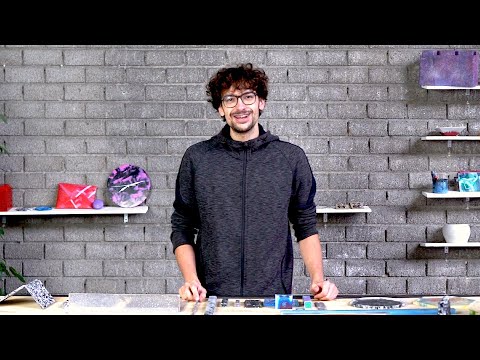
Build a design-led plastic upcycling studio in Dhaka that transforms plastic waste into distinctive consumer goods — homeware, jewellery, stationery, accessories — sold via Etsy, Not on the High Street, and direct-to-diaspora channels at a premium that makes the labour cost structure work.
Why now
Etsy's 2023 impact report showed that sustainable/recycled products grew 35% faster than the platform average; buyers explicitly search for "recycled plastic" homeware. Precious Plastic communities worldwide have proven the aesthetic market: colourful, marbled-pattern plastic sheets made from mixed waste command $40–120/m² retail. Bangladesh's low labour costs make hand-finished artisan goods competitive at prices that Western consumers will pay. Shopify and Etsy have both simplified cross-border payment to Bangladesh through bKash/Payoneer integrations in the last two years.
Why Bangladesh
Bangladesh has the labour cost structure to make artisan plastic upcycling economically viable in a way that a UK or US workshop cannot — a skilled artisan costs ৳15,000–25,000/month vs. £2,500–3,500 in the UK. The country already has a large craft export tradition (jute goods, embroidered textiles, kantha quilts) with established export documentation workflows. Plastic waste feedstock is essentially free — construction site polybags, garment factory waste, and household collection cost near zero in Dhaka. The diaspora channel is underexploited: 10+ million Bangladeshis abroad are proven buyers of Bangladeshi artisan goods.
As a business
Revenue is online marketplace sales at $15–80 per item, with 35–45% gross margin after platform fees, materials, and labour. The business scales not through volume manufacturing but through design differentiation — each collection introduces new colour palettes and forms that photograph well and maintain price points. The founder's personal brand and social media presence are the primary marketing channel; this is a creator-economy business as much as a manufacturing business. Export revenue benefits from Bangladesh's zero-tariff access to EU and UK markets under EBA/DCTS.
Economics
Move the sliders to model your own upcycled plastic export business. Defaults are order-of-magnitude estimates — pressure-testing them is part of what a founder pitches us.
Model an upcycled plastic export goods studio
Clears its setup cost after ~2 months, then profit (volt) from there. Hover or tap the chart for any month.
Illustrative model — defaults are order-of-magnitude estimates from public data, not a forecast. Pressure-test every number before you build.
What AimHuge would back
This is the most founder-dependent idea in this batch: the business is inseparable from the designer's aesthetic vision and online presence. AimHuge would back a founder who already has a live Etsy or Instagram shop with 500+ followers and documented sales, not someone proposing to start from scratch. We'd provide a small seed grant (not equity) to professionalise the studio and help with export documentation — if it breaks ৳5M annual revenue, we'd revisit for a proper investment.
Impact
A studio selling 300 items per month processes roughly 60–90 kg of plastic waste into finished goods, preventing that material from entering Dhaka's open drainage system or being informally burned. Each kilogram of plastic diverted from open burning avoids approximately 2.9 kg CO₂e; at 1 tonne per month diverted, the studio avoids roughly 35 tCO₂e per year. The FX angle is compelling: at $35 per item and 300 items per month, the studio earns ~$10,500/month in export revenue from a raw material that costs essentially nothing — a near-pure value-add on the country's waste stream.
Also being built elsewhere
Companies proving the model in other markets.
Open-source plastic upcycling network with 40,000+ members in 400 workspaces; Bazar marketplace proves export demand for handmade recycled-plastic goods
Recycled fishing-net products (skateboards, sunglasses) with EU & US retail distribution; shows design-led plastic upcycling can reach mainstream retail channels
More Circular Materials ideas
Other climate businesses we want built.