Idea Bank — Request for Climate Startups
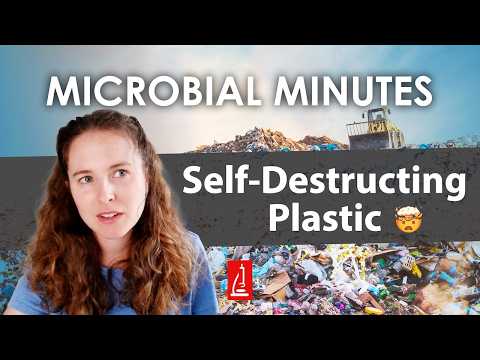
Self-Destructing Plastics
Polymers that degrade on a set timeline — a watch item for BD's single-use plastic crisis.
The ask
Build a materials-science venture commercialising programmed-degradation polymers — plastics with a built-in expiry date — for packaging applications in South and Southeast Asia.
Why now
Catalytic-degradation chemistry (oxo-biodegradable and enzyme-embedded PET) has moved from lab curiosity to early pilot production in the last three years. Regulatory pressure — Bangladesh's 2002 polythene ban is poorly enforced; the EU's SUP Directive and ASEAN equivalents are creating global demand for genuinely short-lived packaging alternatives. The window to establish IP and supply contracts before chemical giants move in is 2–4 years.
Why Bangladesh
Bangladesh produces roughly 3 000 tonnes of plastic waste per day with near-zero formal collection; single-use sachets and polythene bags are the dominant fraction. A plastic that self-destructs in 6–24 months at ambient temperatures is more valuable here than anywhere — it sidesteps the broken collection infrastructure. The country's nascent polymer-processing industry (packaging for the garment sector) can host pilot extrusion lines without greenfield capital.
As a business
Revenue comes from licensing a degradation-catalyst masterbatch to existing plastic compounders, or from direct supply of film and bag stock at a 15–25 % premium over virgin poly. First customers are FMCG exporters who need to satisfy EU due-diligence requirements; domestic brand owners follow once costs fall. Margins live in the proprietary catalyst formulation, not the commodity resin.
Economics
Move the sliders to model your own masterbatch licensing business. Defaults are order-of-magnitude estimates — pressure-testing them is part of what a founder pitches us.
Model a degradation masterbatch business
Clears its setup cost after ~6 months, then profit (volt) from there. Hover or tap the chart for any month.
Illustrative model — defaults are order-of-magnitude estimates from public data, not a forecast. Pressure-test every number before you build.
What AimHuge would back
A polymer chemist or materials-science PhD team that has already synthesised a working catalyst and can show controlled degradation data. We are not funding idea-stage here — this is a watch item until a technical founder with bench results approaches us. Pre-seed cheque for IP protection and a 6-month extrusion pilot.
Impact
Bangladesh generates roughly 3,000 tonnes of plastic waste per day with near-zero formal collection; a masterbatch that causes packaging to fully degrade within 6–24 months at ambient temperatures eliminates the need to collect or incinerate that fraction. At 20 tonnes per month of masterbatch sold — each tonne treating roughly 100 tonnes of finished plastic film — the business addresses 2,000 tonnes per month of packaging waste that would otherwise persist for decades. If adopted by 5% of Bangladesh's FMCG packaging sector, the avoided accumulation is equivalent to removing 500,000 tCO₂e of long-lived plastic pollution from the waste stream per year on a lifecycle basis.
Also being built elsewhere
Companies proving the model in other markets.
Pioneer in enzyme-embedded biodegradable PLA; 2,500 t/year production line already running — proves the enzyme-masterbatch model at commercial scale
Berkeley spinout embedding polyester-eating enzymes at manufacturing; raised seed funding — closest IP analog to the Bangladesh masterbatch-licensing play
Seaweed-based packaging that disappears in weeks; won EU Earthshot Prize — demonstrates regulatory and consumer appetite for genuinely short-lived packaging
More Circular Materials ideas
Other climate businesses we want built.