Idea Bank — Request for Climate Startups
Recycled Rubber Roads
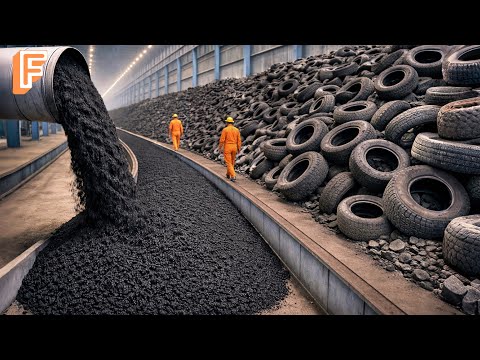
Grind end-of-life tyres into crumb rubber and blend into asphalt to extend road life.
The ask
Build a crumb-rubber processing plant that grinds end-of-life tyres and sells rubberised asphalt modifier to road contractors — turning Bangladesh's tyre waste into a premium paving material that cuts pothole maintenance by 30–50%.
Why now
Bangladesh registers over 400,000 new vehicles per year; the tyre waste pile-up has no formal outlet and open burning is under increasing regulatory pressure. India, the UAE, and several African markets have commercially proven rubberised bitumen at scale, providing a clear technology blueprint. RHD and LGED are both under pressure to lower road life-cycle costs after chronic pothole complaints on newly built roads.
Why Bangladesh
Dhaka and Chattogram alone generate an estimated 50,000+ tonnes of scrap tyres annually with virtually no formal collection infrastructure — raw material is cheap or free. Bangladesh's high-humidity climate accelerates conventional asphalt cracking, making the durability premium of rubber-modified asphalt especially valuable. The road construction sector is one of the largest government spending categories, giving a qualified supplier a captive B2G market.
As a business
Revenue comes from two directions: tipping fees charged to tyre shops and garages for disposal (৳5–15 per tyre) plus sale of crumb rubber modifier to asphalt plants at ৳60–90/kg — a spread that can yield 40–55% gross margins once the shredding line is running. Longer term, coloured crumb rubber sold to playground and sports-surface manufacturers commands a 3× price premium. The B2G sales cycle is slow but sticky once approved on a contractor's approved materials list.
Economics
Move the sliders to model your own crumb rubber plant. Defaults are order-of-magnitude estimates — pressure-testing them is part of what a founder pitches us.
Model a crumb-rubber processing plant
Clears its setup cost after ~14 months, then profit (volt) from there. Hover or tap the chart for any month.
Illustrative model — defaults are order-of-magnitude estimates from public data, not a forecast. Pressure-test every number before you build.
What AimHuge would back
A founder with a prior track record in industrial waste processing or road construction supply chains who can navigate LGED/RHD procurement and land an initial pilot contract. We want to see a working shredder line and a signed letter of intent from at least one asphalt plant before Series A conversations.
Impact
Processing 500 tyres/day yields 750 kg of crumb rubber, diverting ~54,000 tyres/year from open burning — which emits roughly 8–10 kg CO₂e per tyre — avoiding an estimated 450 t CO₂e/year at the default scale, plus eliminating toxic PAH and black-carbon pollution. Rubberised bitumen roads last 30–50% longer than conventional asphalt in Bangladesh's monsoon climate, cutting lifecycle road maintenance costs by an estimated $150,000/km over 10 years — a compelling B2G value proposition for RHD and LGED. Bangladesh currently imports bitumen modifier additives; crumb rubber partially displaces these, saving hard currency while giving the road sector a domestic, traceable sustainability story.
Also being built elsewhere
Companies proving the model in other markets.
India's largest CRM producer, having supplied rubberised bitumen for 200,000+ lane-km of Indian roads — the direct regional blueprint for Bangladesh scale-up.
Manufacturer and supplier of crumb rubber for CRMB road construction, exporting to regional markets — demonstrates the export opportunity for excess Bangladeshi crumb rubber.
More Circular Materials ideas
Other climate businesses we want built.