Idea Bank — Request for Climate Startups
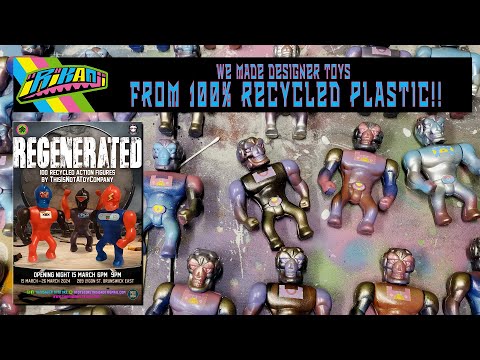
Recycled Plastic Toy Sets
Injection-moulded children's toys from post-consumer plastic waste, made for export.
The ask
Set up a small injection-moulding unit producing children's toy sets — car tracks, building blocks, simple figures — from sorted post-consumer plastic waste, targeting both local retail and export to eco-conscious toy buyers.
Why now
Global toy buyers (particularly in Europe and the US) are under pressure to offer recycled-content products; EU Ecodesign rules now require recycled content labelling on toys. Recycled-plastic toys exist but are almost entirely manufactured in China — a Bangladesh source would be novel and carry a compelling origin story. Meanwhile, injection-moulding machines capable of handling rPET and rHDPE are available secondhand at 40–60% below new prices.
Why Bangladesh
Bangladesh collects an estimated 2.5 million tonnes of plastic waste annually, of which only ~15% is formally recycled; HDPE and PP from household and packaging waste are abundant inputs. The garment sector has established Bangladesh as a credible light-manufacturing export platform, and the same bonded-warehouse and EPZ infrastructure can host a toy unit. Labour costs are among the lowest in Asia, keeping conversion costs competitive even when using virgin-equivalent sorted plastic feedstock.
As a business
Dual market: domestic wholesale to toy retailers and school-supply distributors (volume, thin margin), and export to European eco-toy brands under private-label or co-branded arrangements (lower volume, 3–4× margin). The recycled-content certificate and the origin story are the premium drivers for export. A third line — selling sorted plastic pellets to other manufacturers — provides a floor price backstop if moulding demand is lumpy.
Economics
Move the sliders to model your own recycled toy unit. Defaults are order-of-magnitude estimates — pressure-testing them is part of what a founder pitches us.
Model a recycled plastic toy unit
Clears its setup cost after ~8 months, then profit (volt) from there. Hover or tap the chart for any month.
Illustrative model — defaults are order-of-magnitude estimates from public data, not a forecast. Pressure-test every number before you build.
What AimHuge would back
A founder who has locked in a first export buyer before setting up the line — the machine is the easy part, the EU buyer relationship is the moat. Ideally a team with one person who understands plastic sorting/pelletising and one who has done export manufacturing compliance for the European market.
Impact
A 200-set/day unit processing rHDPE and rPP diverts approximately 21 tonnes/year of sorted post-consumer plastic from landfill or incineration, avoiding roughly 63 t CO₂e/year versus virgin plastic toy production. Bangladesh's garment sector generates abundant, consistent-grade HDPE and PP packaging scrap — a feedstock that currently earns ৳20–35/kg at the informal level; converting it into finished export toys creates 10–15× more value per kg. EU Ecodesign toy labelling requirements from 2025 onward mean the first Bangladesh-origin, certified-rPP toy manufacturer gains a structural advantage over Chinese virgin-plastic competitors in ethical retail channels.
Also being built elsewhere
Companies proving the model in other markets.
Children's furniture and products made entirely from collected recycled plastic toys — proves the premium design positioning and circular take-back model for rPlastic consumer goods.
100% recycled-content toy brand sold in major retail chains — demonstrates that recycled plastic toys command mainstream retail price points with the right certification and branding.
More Circular Materials ideas
Other climate businesses we want built.