Idea Bank — Request for Climate Startups
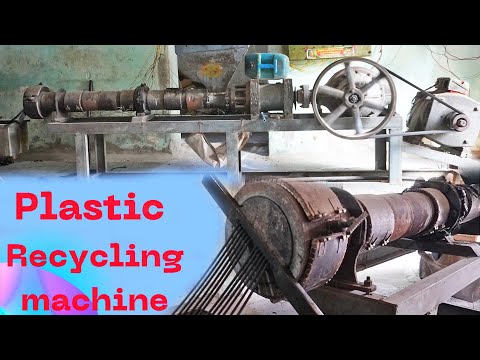
Plastic Pelletiser Network
Affordable pelletiser units letting small recyclers turn mixed plastic waste into sellable feedstock.
The ask
Manufacture or distribute affordable plastic pelletiser machines to small and medium recyclers across Bangladesh, and optionally aggregate the output pellets into a standardised feedstock trading platform that sells to domestic plastics manufacturers.
Why now
Bangladesh generates an estimated 800,000 tonnes of plastic waste annually, but most informal recyclers sell dirty crushed plastic at 30–40% below its potential value because they cannot pelletise — the step that unlocks industrial buyers. Chinese pelletiser machines now cost ৳3–8 lakh for a machine capable of processing 100–200 kg/hr, making them accessible to recycling SMEs for the first time. The Bangladesh government's plastic roadmap (2022) targets 50% plastic recycling by 2030, unlocking grant and DFI finance for the supply chain.
Why Bangladesh
Dhaka alone has thousands of informal plastic collection and sorting operations employing hundreds of thousands of waste pickers; almost none of them can produce market-grade pellets. The garment sector generates clean mono-material PP and HDPE packaging waste at scale, providing a high-quality feedstock that a pelletiser network could prioritise. Domestic pipe, sheet, and packaging manufacturers currently import recycled pellets from India and China — a local supply would be cost-competitive on freight alone.
As a business
Three revenue lines: (1) machine sales or leasing to recyclers; (2) a franchise/network model where the platform owns the quality certification and sells market access, taking a toll on pellet trades; (3) bulk pellet aggregation and resale to manufacturers with a grade premium. The aggregation model builds a defensible data asset — knowing the volume, grade, and location of every recycler in the network — that compounds over time.
Economics
Move the sliders to model a pelletiser network. Defaults are order-of-magnitude estimates — pressure-testing them is part of what a founder pitches us.
Model a plastic pelletiser network
Does not break even within 5 years at these inputs — adjust the sliders. Hover or tap the chart for any month.
Illustrative model — defaults are order-of-magnitude estimates from public data, not a forecast. Pressure-test every number before you build.
What AimHuge would back
A founder who comes from the recycling trade and understands informal recycler economics from the inside — the trust problem (recyclers won't use a platform they don't control) is the main barrier, not the technology. We would back a team that has already onboarded five recyclers to a pilot and can show quality-consistent pellet samples.
Impact
A distributed pelletiser network converts heterogeneous plastic waste that currently goes to open burning or river dumping into standardised food-grade-adjacent regranulate. Burning 1 kg of mixed plastic releases ≈2.9 kgCO₂e; at 20 machines × 150 kg/day × 300 days, the network diverts 900 tonnes of plastic per year from combustion, avoiding ≈2 610 tCO₂e annually. Each machine node supports 3–4 collection workers and 1–2 machine operators, with additional platform and logistics jobs at the hub — roughly 100 FTEs at 20 nodes. Bangladesh imports ≈$200 m/year of virgin plastic resin; domestic recycled pellets at even $0.50–0.80/kg below virgin price save meaningful foreign exchange and give domestic manufacturers a cost-competitive recycled input.
Also being built elsewhere
Companies proving the model in other markets.
Fair-trade platform connecting informal recyclers to certified buyers — proves the aggregator-platform model for converting waste-picker supply into traceable recycled pellets.
Digitised 2 000 informal scrap aggregators into a supply chain platform — directly analogous network model for pelletiser coordination.
More Circular Materials ideas
Other climate businesses we want built.