Idea Bank — Request for Climate Startups
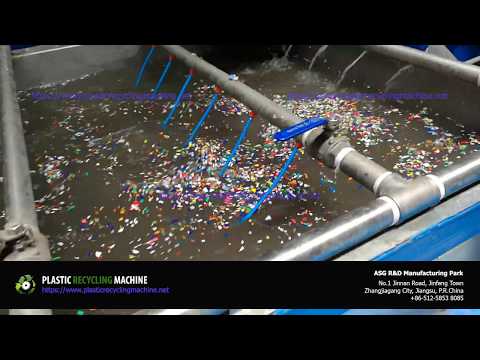
Plastic Flotation Sorting
Water-bath density sorting turns Bangladesh's mixed plastic waste into clean, saleable resin streams.
The ask
Build micro-scale flotation-sorting stations — essentially structured water-bath tanks with agitation — that upgrade mixed plastic waste into separated resin-type streams (PET, HDPE, PP, PS) saleable to Bangladeshi recyclers at a significant premium over mixed bales.
Why now
Bangladesh imports significant virgin resin while sitting on 3 000 tonnes/day of mixed plastic waste that is largely unsorted and therefore low-value. Flotation separation is proven industrial technology adapted from mineral processing; the unit cost per station has fallen to the point where it can be installed in a 200 m² shed for under ৳10 lakh. Recycler gate prices for clean separated-resin feedstock are 40–80 % higher than mixed bales, creating an obvious arbitrage.
Why Bangladesh
Dhaka and Chittagong informal waste-pickers collect roughly 1 000 tonnes of plastic per day but sell into aggregators who pay low mixed-bale prices because they lack sorting infrastructure. A flotation station inserted between picker networks and recyclers captures the sorting margin. Bangladesh's garment sector creates a concentrated, somewhat consistent plastic waste stream (stretch wrap, strapping, soft packaging) that is ideal for this technology.
As a business
The station operator buys mixed plastic at ৳6–8/kg and sells separated streams at ৳12–20/kg depending on resin type; the spread is the margin. A single station processing 3 tonnes/day at ৳5/kg net margin generates roughly ৳45 lakh per year in profit on ৳8–10 lakh of equipment. Scaling is modular — each station is an identical unit; a hub of 5–10 stations run by a district franchise captures a city-level market.
Economics
Move the sliders to model your own flotation sorting station. Defaults are order-of-magnitude estimates — pressure-testing them is part of what a founder pitches us.
Model a plastic flotation sorting station
Clears its setup cost after ~3 months, then profit (volt) from there. Hover or tap the chart for any month.
Illustrative model — defaults are order-of-magnitude estimates from public data, not a forecast. Pressure-test every number before you build.
What AimHuge would back
A founder running a live station with 30 days of throughput data — buy price, sort yield, sell price, water consumption — and relationships with at least two recycler buyers. We will fund a 5-station cluster as a first institutional cheque, with rollout capital staged against proven per-station economics.
Impact
A flotation station processing 3,000 kg/day upgrades mixed plastic at ~৳7/kg to sorted resin worth ~৳15/kg, unlocking 40–80% more value from the same waste stream and making downstream recycling economically viable. Each tonne of sorted plastic that displaces virgin resin avoids roughly 2–3 t CO₂e; at 300 operating days the default station avoids ~2,700 t CO₂e/year. Bangladesh loses foreign exchange on virgin resin imports estimated at $600 million/year — every tonne of quality recyclate substituted saves roughly $1,000–1,200 in import cost. Sorting stations also create skilled technical roles that upgrade informal waste pickers along the value chain.
Also being built elsewhere
Companies proving the model in other markets.
Specialist manufacturer of float-sink separation equipment for plastic recyclers — the technology provider behind industrial sorting lines worldwide.
European supplier of compact sink-float tanks for small-to-mid recyclers, validating the sub-৳10 lakh unit economics at 1–5 tonne/hour scale.
India's leading FMCG-bottle recycler integrates sorting infrastructure across 35+ cities, proving the value-chain model between pickers, sorters, and brand offtakers.
More Circular Materials ideas
Other climate businesses we want built.