Idea Bank — Request for Climate Startups
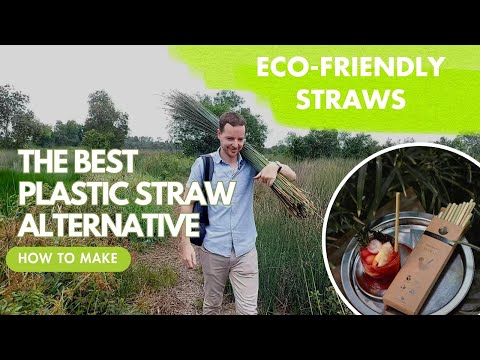
Grass Straws
Manufacture drinking straws from dried grass and reed to replace single-use plastic in Bangladesh's F&B sector.
The ask
Build a factory in coastal or haor Bangladesh that harvests, dries, cuts, and quality-grades natural grass and reed stems into drinking straws, supplying the domestic F&B sector and exporting to premium markets as a certified plastic-free alternative.
Why now
Bangladesh's 2023 ban on single-use plastic items in food service (MOEF notification) created overnight demand for alternatives; restaurants and hotels are under enforcement pressure. Vietnam's Ong Hut Co grass-straw export business demonstrated the model at scale — USD 3–5 million ARR from a single factory. Bangladesh grows Lepironia articulata (reed grass) in its haor wetlands at no cultivation cost; the raw material is currently unutilised and harvesters would sell for ৳2–5/kg.
Why Bangladesh
Bangladesh has 1.4 million hectares of haor and beels producing abundant reed and grass species with the hollow-stem geometry required for straws. The garment sector's existing export infrastructure (Chittagong port, freight forwarders, compliance auditors) is directly reusable for straw exports to EU, UK, and Gulf markets. Domestically, the restaurant and hotel sector consumes an estimated 2–4 billion plastic straws per year — a substitution market worth ৳60–150 crore at ৳3–5/straw.
As a business
Revenue split between domestic B2B supply (hotels, restaurants, beverage brands) at ৳3–5/straw and export at USD 0.04–0.07/straw. The factory's key cost is labour (cutting, quality-sorting) and drying energy — solar drying eliminates the latter in 8 months of the year. A 5-tonne/day processing operation produces roughly 1 million straws/day; at ৳4 average blended price and 40 % gross margin, that is ৳160 000/day in gross profit on roughly ৳120 lakh of investment.
Economics
Move the sliders to model your own grass-straw factory. Defaults are order-of-magnitude estimates — pressure-testing them is part of what a founder pitches us.
Model a grass straw factory
Clears its setup cost after ~0 months, then profit (volt) from there. Hover or tap the chart for any month.
Illustrative model — defaults are order-of-magnitude estimates from public data, not a forecast. Pressure-test every number before you build.
What AimHuge would back
A founder who has solved the supply-chain problem: a confirmed raw-material sourcing agreement with haor harvesters, a working drying and cutting line, and a quality sample that has passed a food-contact safety test. The domestic sale is easy once you have product; export requires EU food-contact certification. We will fund the first container-scale export trial and domestic distributor onboarding.
Impact
Each grass straw directly displaces one single-use plastic straw (≈0.6 g PP, ≈2.5 gCO₂e including production and end-of-life burning); at 800 000 straws/day over 300 days, one factory avoids roughly 600 tCO₂e/year versus the plastic baseline. The country imports essentially all of its plastic straw feedstock as polypropylene resin or finished straws, so each grass straw also saves hard currency. Wild sedge grass (Lepironia articulata) grows naturally in Bangladesh's Sylhet and Chittagong wetlands and needs no irrigation, fertiliser, or land conversion. A production line of this scale requires 120–150 direct farm and factory workers, spreading income into rural wetland communities that have few other cash-crop options.
Also being built elsewhere
Companies proving the model in other markets.
Sold 30 m+ Lepironia grass straws globally; won VietChallenge 2021 — closest model to what Bangladesh could replicate using the same grass species.
Export-scale grass straw producer; demonstrates B2B bulk pricing and export-certification pathway for hospitality sector buyers.
More Circular Materials ideas
Other climate businesses we want built.