Idea Bank — Request for Climate Startups
Dhaka Citywide Composting
NYC-scale municipal organics diversion applied to Dhaka's 14,000 tonnes of daily waste.
The ask
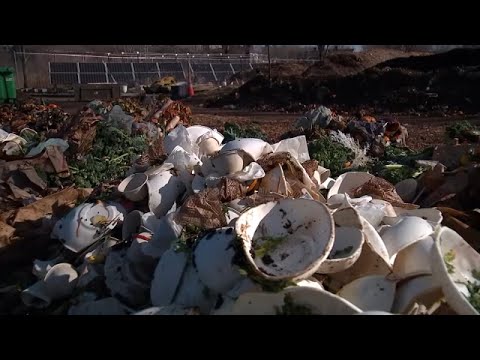
Build the private-sector backbone for citywide organic-waste composting in Dhaka — collecting kitchen and market waste from neighbourhoods and wet markets, processing it through windrow or in-vessel composting, and selling the output as bagged compost to farmers and horticulture buyers — following the playbook proven by New York City's successful 2022 organics expansion.
Why now
New York City's mandatory organics programme diverted 30,000 tonnes/month within its first year of full citywide rollout in 2024, proving that dense urban organics collection is logistically and economically viable at scale. Dhaka City Corporation (DSCC/DNCC) has a waste management budget and increasingly faces international scrutiny on its landfill situation (Matuail is at capacity). A private operator can step in as a processing contractor rather than waiting for the municipality to build its own facility — the NYC model was largely private-operator driven.
Why Bangladesh
Dhaka generates approximately 14,000 tonnes of solid waste per day, of which 70–75% is organic (far higher organic fraction than Western cities). Matuail landfill serves a city of 22 million and is expanding into flood-plain land. Simultaneously, Bangladesh's soil organic carbon levels have declined sharply due to intensive cropping, creating genuine farmer demand for compost — DAE has an active subsidy programme for organic fertiliser. The wet markets of Kawran Bazar, Mirpur, and New Market alone generate hundreds of tonnes of high-quality organic waste daily in one place, making source separation tractable.
As a business
Revenue from two sources: a tipping fee paid by DSCC/DNCC per tonne of organic waste collected (₯800–1,500/tonne, standard in South Asian municipal contracts), and sale of finished compost to agri-input distributors and government DAE programmes (৳6,000–12,000/tonne). The economics only work with both streams — the tipping fee de-risks the collection side, the compost sale funds the processing side.
Economics
Move the sliders to model your own composting operation. Defaults are order-of-magnitude estimates — pressure-testing them is part of what a founder pitches us.
Model a municipal composting business
Clears its setup cost after ~4 months, then profit (volt) from there. Hover or tap the chart for any month.
Illustrative model — defaults are order-of-magnitude estimates from public data, not a forecast. Pressure-test every number before you build.
What AimHuge would back
A founder who has already navigated a Dhaka City Corporation procurement process or holds an existing waste management contract — the business lives or dies on the municipal agreement, not the composting technology. We'd back someone who can close a DSCC pilot for 50 tonnes/day within six months of funding, with clear contractual rights to sell the compost output independently.
Impact
Processing 80 tonnes per day of Dhaka's organic waste stream diverts roughly 26,000 tonnes per year from Matuail landfill — cutting landfill methane emissions by an estimated 3,200 tCO₂e per year and extending the site's operational life. The finished compost replaces synthetic urea and DAP fertiliser, avoiding a further 900 tCO₂e per year in Scope 3 emissions from imported chemical fertiliser. At full citywide scale — 500 t/day — the operation would employ 400+ direct workers and preserve an estimated $8M per year in hard currency currently spent importing fertiliser precursors.
Also being built elsewhere
Companies proving the model in other markets.
Processes 2,500 t/month across 150 sites; proves private-sector urban composting at scale in a dense South Asian city
Engineered windrow composting contractor supplying municipal clients; shows the tipping-fee plus compost-sale dual-revenue model in practice
More Circular Materials ideas
Other climate businesses we want built.