Idea Bank — Request for Climate Startups
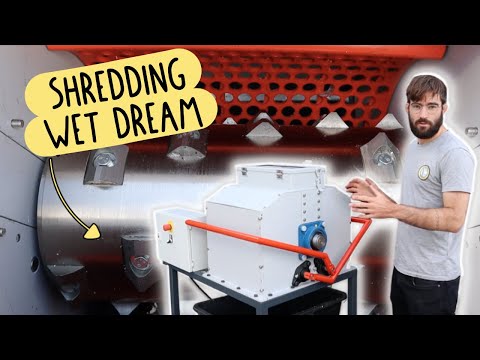
Desktop Plastic Shredder
Affordable tabletop shredders seed a distributed plastic processing network across Bangladesh.
The ask
Manufacture and distribute low-cost (৳15 000–35 000) desktop plastic shredders to micro-recyclers, schools, and community collection points across Bangladesh, building the feedstock-preparation layer of a distributed recycling supply chain.
Why now
The Precious Plastic open-source machine library has proven that sub-৳50 000 shredders can be built from locally available parts; the design has been replicated in 120+ countries. Bangladesh's plastic-collection informal economy is well developed — the gap is not collection but value extraction. A shredded-flake feedstock commands ৳20–30/kg vs ৳6–10/kg for whole mixed plastic; the shredder is the value-capture tool that micro-operators are currently missing.
Why Bangladesh
Dhaka and Chittagong have thousands of small waste-dealers (forkaar) who buy from door-to-door pickers and sell to recyclers; they all process material by hand. A locally manufactured shredder priced within reach of an SME loan turns every mid-size forkaar into a feedstock processor. Bangladesh's metal fabrication capacity (shipbreaking, garment machinery maintenance) can produce the shredder chassis domestically, keeping cost well below imported equivalents.
As a business
The company manufactures shredders and sells direct and through NGO/MFI distribution partners with equipment-loan tie-ups; recurring revenue comes from spare blades and maintenance contracts. A franchise model — sell the machine plus a sourcing and buyback agreement for shredded flake — ties the hardware sale to an ongoing commodity-trading margin. At 200 units/year, hardware revenue alone is ৳3–6 crore; buyback flake trading at 200 tonnes/month adds further upside.
Economics
Move the sliders to model your own shredder manufacturing business. Defaults are order-of-magnitude estimates — pressure-testing them is part of what a founder pitches us.
Model a desktop shredder manufacturing business
Does not break even within 5 years at these inputs — adjust the sliders. Hover or tap the chart for any month.
Illustrative model — defaults are order-of-magnitude estimates from public data, not a forecast. Pressure-test every number before you build.
What AimHuge would back
A maker-founder who has already built and sold 10+ working units with documented customer outcomes (kg processed, income uplift). We want a product that works, not a prototype — and a founder who understands the recycler supply chain well enough to design the buyback programme alongside the hardware.
Impact
A locally manufactured desktop shredder unlocks plastic recycling for thousands of micro-enterprises and community workshops that currently cannot afford industrial equipment; each unit enables its operator to process 50–150 kg of plastic per day that would otherwise be open-burned. At 200 units sold and 80 kg/day average utilisation, the installed base diverts roughly 4 800 tonnes of plastic from combustion per year, avoiding ≈14 000 tCO₂e. The workshop also creates skilled fabrication jobs in machining and electronics assembly, skills that are scarce and well-paid in Bangladesh's manufacturing corridor. By producing the machines domestically rather than importing them from China or Europe, the venture retains an estimated $400 000–600 000/year of equipment-import spending inside the country.
Also being built elsewhere
Companies proving the model in other markets.
Open-source shredder designs downloaded and built in 100+ countries — the design commons the Bangladesh manufacturer would adapt and localise.
Designs and sells compact recycling machines specifically for entrepreneurs in the developing world — direct commercial comparable to the Bangladesh venture.
More Circular Materials ideas
Other climate businesses we want built.