Idea Bank — Request for Climate Startups
Copper Scrap Refining
Collect and refine copper from e-waste and wire offcuts into purified rod for resale.
The ask
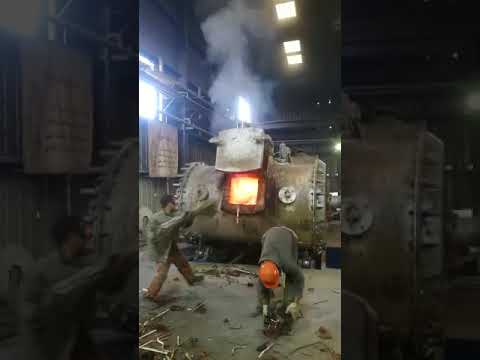
Operate a copper scrap collection and fire-refining operation that upgrades mixed copper waste from electronics dismantlers, wire factories, and cable recyclers into 99%+ purity rod — sold to cable manufacturers and electrical contractors at a meaningful discount to LME-linked virgin copper.
Why now
Global copper prices have risen above $9,000/tonne, making secondary copper economics compelling even at small scale. Bangladesh's garment and electronics assembly sectors generate consistent copper offcuts with reliable purity. The informal sector currently exports raw scrap to China at low value — a domestic refinery captures that upgrade margin locally.
Why Bangladesh
Bangladesh's Dhaka EPZ and Chittagong industrial zones host hundreds of cable and electronics manufacturers generating copper offcuts daily. The country also imports significant quantities of consumer electronics (phones, fans, appliances) whose end-of-life copper ends up in informal Hazaribagh-type clusters with no formal buyer. Domestic cable manufacturers are the natural offtake partner — they currently import copper rod from India and China, facing both FX risk and lead times.
As a business
Margin comes from the spread between scrap copper (typically 60–75% of LME) and refined rod sold at 85–92% of LME — a 15–25% value-add on the copper price plus volume throughput. A small fire-refinery (induction furnace + rod-rolling line) can process 5–10 tonnes per day at SME capital cost. Collection is via a network of paid aggregators at electronics repair clusters; sales are direct to cable factories on monthly supply contracts.
Economics
Move the sliders to model your own copper refinery. Defaults are order-of-magnitude estimates — pressure-testing them is part of what a founder pitches us.
Model a copper scrap refinery
Clears its setup cost after ~3 months, then profit (volt) from there. Hover or tap the chart for any month.
Illustrative model — defaults are order-of-magnitude estimates from public data, not a forecast. Pressure-test every number before you build.
What AimHuge would back
A founder who combines industrial procurement experience (buying scrap at scale) with a technical grasp of metallurgical refining — or who has secured a technology partner. A signed offtake MOU from a domestic cable manufacturer and a demonstrated scrap supply chain of at least 2 t/day would be the proof points we want to see before leading a seed round.
Impact
A 6 t/day copper scrap refinery displaces roughly 1,500 tonnes of imported copper rod per year, saving Bangladesh approximately $13M in hard-currency imports at current LME prices. Secondary copper refining is 85% less energy-intensive than smelting virgin ore, avoiding an estimated 4,000–5,000 tCO₂e per year relative to the Chinese and Indian virgin-rod imports it replaces. The operation also formalises the informal Hazaribagh-type electronics-dismantling cluster, creating 60–80 direct jobs in a regulated, lower-toxicity environment.
Also being built elsewhere
Companies proving the model in other markets.
Largest secondary copper smelter in Europe; proves 100% scrap-fed refinery at industrial scale is viable and bankable
India's leading copper producer now runs a significant scrap-recycle stream alongside primary smelting — regional proof point for South Asia
More Circular Materials ideas
Other climate businesses we want built.