Idea Bank — Request for Climate Startups
Construction Waste Recycling
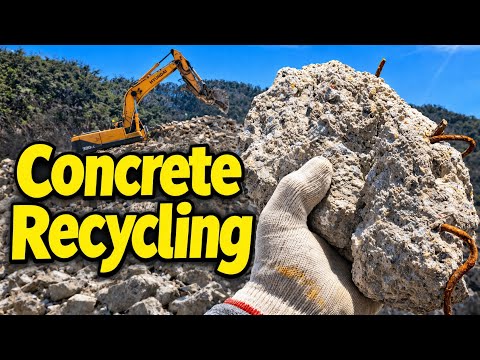
Crush C&D rubble into recycled aggregate for concrete and road sub-base.
The ask
Operate a mobile or fixed crushing and grading plant that processes construction and demolition (C&D) debris into certified recycled coarse aggregate — sold to ready-mix concrete plants, road contractors, and fill suppliers as a lower-cost substitute for virgin stone chips.
Why now
Dhaka's building boom generates an estimated 6,000–8,000 tonnes of C&D waste per day, almost all of which is illegally dumped in canals or on the urban periphery. The Bangladesh National Building Code now references recycled aggregate standards, giving buyers a procurement hook. Virgin stone chips are quarried in Sylhet and railed to Dhaka — a supply chain that adds ৳800–1,200/tonne in transport cost that recycled aggregate can undercut.
Why Bangladesh
Bangladesh has one of the world's highest urban demolition rates (building cycles of 20–30 years are common in Dhaka) — the raw material is abundant, consistent, and free to zero cost with the right tipping-fee model. Dense urban construction means haul distances are short. Bangladesh's chronic stone-chip shortage (Sylhet quarries face periodic closures) creates recurring price spikes that recycled aggregate can arbitrage.
As a business
Revenue combines a tipping fee per tonne received (৳200–400/t) with aggregate sales at ৳600–900/t for 20mm coarse and ৳400–600/t for sub-base fill — two revenue legs that make the economics resilient. The dominant customer is the ready-mix concrete sector, which is large, repeat-purchase, and price-sensitive enough to trial recycled aggregate when the quality certificate is in hand. A mobile plant serves multiple demolition sites before a fixed plant reaches break-even.
Economics
Move the sliders to model your own C&D recycling plant. Defaults are order-of-magnitude estimates — pressure-testing them is part of what a founder pitches us.
Model a C&D aggregate recycling plant
Clears its setup cost after ~13 months, then profit (volt) from there. Hover or tap the chart for any month.
Illustrative model — defaults are order-of-magnitude estimates from public data, not a forecast. Pressure-test every number before you build.
What AimHuge would back
A founder with existing relationships in the construction or demolition contracting sector who can lock in a steady feedstock stream before the plant is commissioned. We want to see a working pilot operation processing at least 50 tonnes/day with two confirmed aggregate buyers before committing growth capital.
Impact
Recycled concrete aggregate (RCA) displaces quarried virgin aggregate, whose extraction and transport carries roughly 8–12 kgCO₂e per tonne in Bangladesh's context; at 200 t/day and 300 days, a single plant avoids ≈480 tCO₂e/year versus landfilling plus virgin extraction. Every 50 tonnes of daily throughput supports 4–6 direct jobs in plant operation and 2–4 indirect jobs in logistics. Bangladesh's construction boom generates an estimated 3–5 million tonnes of C&D waste annually, almost all of it dumped into wetlands and riverbeds at enormous ecological cost; RCA plants convert that liability into a revenue stream while protecting aquatic habitats. Importing crushed aggregate and gravel from India and Myanmar costs Bangladesh an estimated $80 m/year; domestic RCA directly displaces that bill.
Also being built elsewhere
Companies proving the model in other markets.
Commissioned Maharashtra's first dedicated C&D waste processing plant in 2024 — closest South Asian analogue to the Bangladesh opportunity.
Demonstrates the full economics of turning demolished concrete into profitable recycled aggregate at commercial scale.
More Circular Materials ideas
Other climate businesses we want built.