Idea Bank — Request for Climate Startups
Coconut Shell Charcoal
Converting coconut husk waste into premium cooking fuel and activated carbon for rural BD.
The ask
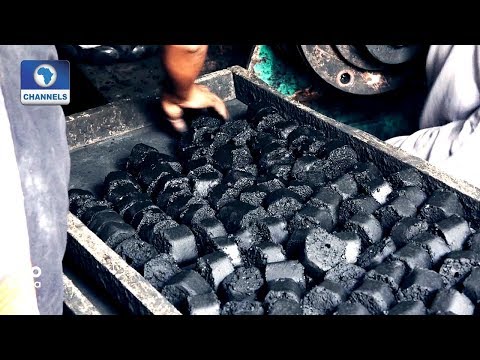
Install small-scale coconut-shell carbonisation machines to convert agricultural waste husks into high-value charcoal briquettes for cooking fuel and, at higher processing stages, into activated carbon for water filtration and industrial use.
Why now
Activated carbon demand is growing 8% annually globally, driven by water treatment, air purification, and gold mining — and coconut-shell activated carbon commands a 30–50% premium over coal-derived activated carbon due to higher purity. Small-scale retort kilns suitable for village-level operation are now available from Indian and Chinese manufacturers for under ৳10 lakh, crossing the affordability threshold for cooperative or individual SME ownership. The alternative — open burning of coconut husks — is increasingly regulated under Bangladesh's air-quality rules.
Why Bangladesh
Bangladesh produces roughly 1.2 billion coconuts annually; the coastal districts of Barisal, Khulna, Noakhali, and Cox's Bazar generate concentrated husk volumes near fishing and rural communities. Currently ~80% of husks are burned or composted with minimal value capture. A single tonne of coconut shell converts to ~280 kg of charcoal worth ৳25,000–40,000 as cooking fuel or ৳120,000–180,000 as activated carbon — versus near-zero as field waste.
As a business
Two-stage model: first, sell charcoal briquettes locally as a cleaner cookfuel alternative to firewood (low margin, high volume, immediate cash flow); second, invest in activation furnaces and moisture-grading equipment to produce export-grade activated carbon for water-treatment or pharmaceutical buyers (high margin, longer sales cycle). Carbon credits for avoided open burning provide a third revenue line at scale.
Economics
Move the sliders to model your own coconut charcoal unit. Defaults are order-of-magnitude estimates — pressure-testing them is part of what a founder pitches us.
Model a coconut shell charcoal unit
Clears its setup cost after ~2.7 years, then profit (volt) from there. Hover or tap the chart for any month.
Illustrative model — defaults are order-of-magnitude estimates from public data, not a forecast. Pressure-test every number before you build.
What AimHuge would back
A founder based in a coconut-producing coastal district who has secured an offtake agreement — even a handshake one — with a local briquette distributor or a water-treatment company looking for activated carbon. The machine is commodity; reliable shell supply and a buyer are the hard parts.
Impact
Coconut shell charcoal displaces wood charcoal (≈3.7 kgCO₂e per kg of wood charcoal produced) and imported fossil-fuel briquettes (coal-based shisha charcoal ≈3.0 kgCO₂e/kg) with a waste-stream product whose net carbon is close to zero. At 500 kg shells/day and a 28% yield, one kiln produces 140 kg of charcoal daily, avoiding roughly 370 tCO₂e/year versus the wood-charcoal baseline. Bangladesh's coconut belt (Noakhali, Barisal, Khulna) generates hundreds of thousands of tonnes of discarded shells annually, mostly burned in the open; converting them to controlled-kiln charcoal additionally slashes black-carbon aerosol emissions. Export value — shisha charcoal fetches $1.5–2.0/kg FOB, a hard-currency earner that reduces the country's dependence on fossil-fuel charcoal imports.
Also being built elsewhere
Companies proving the model in other markets.
Large-scale coconut shell charcoal briquette exporter serving Middle East shisha market — proves the export economics and quality-control pathway.
Produces certified coconut shell charcoal briquettes with consistent quality for Japan and Korea — template for the export-certification process Bangladesh would need.
More Circular Materials ideas
Other climate businesses we want built.