Idea Bank — Request for Climate Startups
Bottle Cap Upcycling Studio
Collect and press plastic bottle caps into decorative tiles, furniture inlays, and street furniture for urban markets.
The ask
Build a micro-manufacturing studio in Dhaka that aggregates plastic bottle caps from waste pickers, sorts them by colour, and compression-moulds them into decorative tiles, furniture inlays, and public seating — creating a traceable, visual circular-economy product with a clear social-impact story for institutional and export buyers.
Why now
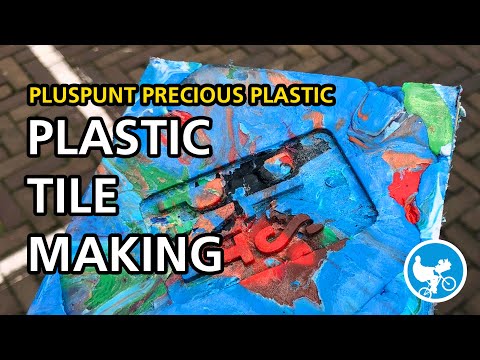
Dhaka generates an estimated 500 tonnes of plastic bottle caps per day that currently escape formal recycling because they are too small for standard shredding and contaminate PET bale quality. Compression-moulding of mixed polyethylene caps into colourful tiles is now proven at small scale by Precious Plastic workshops across Asia and Africa; the machinery costs under $5,000. Corporate ESG procurement teams at FMCG companies are actively looking for visible, measurable plastic-offset programmes they can put on packaging — a branded tile programme fits exactly.
Why Bangladesh
Bangladesh has the densest informal waste-picking network in South Asia — over 150,000 waste pickers operate in Dhaka alone. Formalising bottle-cap collection through them creates a supply chain at near-zero feedstock cost while generating documented social impact. The country's hotel and restaurant sector, growing 8% annually, is a natural tile buyer. Export potential to Gulf and European hotel chains — who are buying 'story materials' for lobbies and public spaces — is real at the right quality and certification level.
As a business
Revenue is B2B tile sales to interior designers, hotel groups, and corporate office fit-outs at ৳1,500–4,000 per square metre — comparable to mid-range ceramic tiles but with a premium for the sustainability narrative. Custom colour-mosaic panels for brand activations and art installations command higher rates. A waste-picker co-operative model on the supply side reduces feedstock cost to near zero while qualifying for social-enterprise grants and certification premiums.
Economics
Move the sliders to model your own bottle cap upcycling studio. Defaults are order-of-magnitude estimates — pressure-testing them is part of what a founder pitches us.
Model a bottle cap tile studio
Clears its setup cost after ~22 months, then profit (volt) from there. Hover or tap the chart for any month.
Illustrative model — defaults are order-of-magnitude estimates from public data, not a forecast. Pressure-test every number before you build.
What AimHuge would back
A founder who has already produced tile samples, secured a supply arrangement with a waste-picker group, and has at least one hotel, restaurant, or corporate client interested in a pilot installation. We are equally interested in the supply-chain design as the product design — the impact story is only credible if the waste-picker relationship is formal and fairly compensated.
Impact
At 120 sq m/month output, this studio diverts roughly 2.4 tonnes/year of HDPE/PP bottle caps from Dhaka's landfills — caps that currently contaminate PET bale quality and escape conventional recycling. Each sq m of compression-moulded tile replaces roughly 0.8 kg of virgin polymer or imported ceramic equivalent, avoiding approximately 1.4 t CO₂e/year at default scale. The visible social story — each tile carries the traceable origin of Dhaka waste-pickers' collection — makes this one of the most media-friendly plastic-waste products, giving FMCG brands a highly photographable ESG offset programme. Scaled to 20 studios across Bangladesh's major cities, the model can formalise collection routes for 150,000+ informal waste-pickers while creating a premium material export to the global architectural surfaces market.
Also being built elsewhere
Companies proving the model in other markets.
Open-source compression-moulding toolkit used in 600+ workshops to make tiles and panels from bottle caps — the proven technical model and global distribution channel.
Luxury recycled bottle-cap tile manufacturer in Kigali supplying premium interior markets — the closest comparable to a Bangladesh studio serving Dhaka's high-end hospitality sector.
Design-studio tiles made from recycled plastic bottles, selling to architects and fit-out contractors — proves the architect-spec sales channel for recycled-plastic surface products.
More Circular Materials ideas
Other climate businesses we want built.