Idea Bank — Request for Climate Startups
Biodegradable Seedling Pots
Seedling pots pressed from jute or rice-husk waste, replacing single-use plastic nursery pots.
The ask
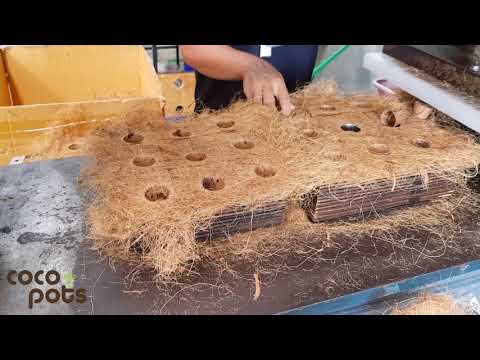
Press biodegradable seedling pots from jute fibre waste or rice husk, sell them to nurseries, vegetable farmers, and urban gardeners as a drop-in replacement for the black polyethylene pots that currently clog Bangladesh's waterways after each planting season.
Why now
Bangladesh banned single-use polythene in 2002 and is tightening enforcement on agricultural plastics. Nursery pots are one of the largest visible offenders — hundreds of millions used annually across commercial horticulture and homestead vegetable plots. Moulded fibre technology is proven and cheap; a simple hydraulic press with a steel mould can produce pots at competitive unit cost. European and South-East Asian markets pay a 20–30 % premium for certified biodegradable pots, creating an export upside.
Why Bangladesh
Bangladesh produces roughly 8 million tonnes of rice paddy per year, leaving vast quantities of rice husk available at near-zero cost from milling clusters in Narayanganj, Gazipur, and Bogura. Jute stick and jute cutting waste are similarly abundant and under-utilised. Local labour costs make hand-assisted pressing viable at small scale, and the nursery sector — concentrated around Jessore, Gazipur, and Chittagong — is a captive, reachable customer base.
As a business
The model is volume manufacturing sold direct to nurseries and through agri-input distributors. A 100 mm pot priced at ৳5–8 competes with a plastic pot at ৳3–5; the premium is justified by regulatory pressure and the 'plant-in-pot' convenience (no transplant shock). Export to European garden centres, where biodegradable pots retail for €0.20–0.40 each, is a higher-margin channel worth targeting in year two once USDA/EU organic certification is obtained.
Economics
Move the sliders to model your own biodegradable pot plant. Defaults are order-of-magnitude estimates — pressure-testing them is part of what a founder pitches us.
Model a biodegradable pot factory
Clears its setup cost after ~2.3 years, then profit (volt) from there. Hover or tap the chart for any month.
Illustrative model — defaults are order-of-magnitude estimates from public data, not a forecast. Pressure-test every number before you build.
What AimHuge would back
A founder who has already run a batch, has a working mould design, and can show us a commercial nursery willing to trial the product. The business is straightforward manufacturing — we want capital-efficient execution and a credible path to 10 million pots per year before we scale the cheque size.
Impact
Each biodegradable coir or jute seedling pot replaces one black polyethylene nursery bag (≈15 g LDPE, ≈55 gCO₂e including production and end-of-life burning); at 5 000 pots/day and 280 days, one press displaces 70 tonnes of LDPE bags per year, avoiding roughly 385 tCO₂e. Bangladesh's nursery sector — ornamental plants, agroforestry, coastal mangrove restoration — uses an estimated 500 million plastic bags annually; switching even 10% would be enormous. Coir and jute are domestic crops, so every pot produced also displaces an equivalent volume of imported PE resin, directly improving the FX balance. Each production unit employs 8–12 people in pressing, drying, and packing, with upstream income for rural coir/jute suppliers.
Also being built elsewhere
Companies proving the model in other markets.
Factory-direct supplier of 100% organic coir fiber pots to US horticulture — demonstrates export-market demand and the product-spec required for greenhouse buyers.
South Indian coir-pot manufacturer supplying nurseries at scale — closest regional analogue to the Bangladesh production model using domestic coir/jute fibre.
More Circular Materials ideas
Other climate businesses we want built.