Idea Bank — Request for Climate Startups
Tropical Insulating Windows and Doors
High-performance insulating joinery engineered for tropical heat and monsoon, cutting cooling loads.
The ask
Manufacture and retail thermally insulating window and door systems — double-glazed, low-E coated, with thermally broken aluminium or uPVC frames — designed specifically for Bangladesh's hot-humid climate and price-pointed for the country's rapidly expanding urban middle-class construction market.
Why now
Bangladesh's construction sector is adding 150,000–200,000 new urban housing units per year, and the government's Building Energy Efficiency Code (mandated for commercial buildings since 2021, residential under review) is beginning to shift specification choices. Air conditioning now accounts for 35–45% of electricity consumption in Bangladeshi urban buildings — a figure that high-performance glazing can reduce by 20–30%. Glass and aluminium fabrication capacity in Dhaka is established; the missing piece is a local manufacturer focused on thermal performance rather than aesthetics alone.
Why Bangladesh
Bangladesh's climate is punishing: peak summer temperatures of 38–42°C and 80–90% humidity mean that a single-pane aluminium window (the overwhelming local standard) transmits heat directly into occupied space, forcing HVAC to work harder. The irony is that Bangladesh exports 55,000 tonnes of glass per year but imports almost all high-performance glazed units. Local labour costs make assembly cheap; the business case is to source low-E glass and thermal spacers from China or India, add local aluminium extrusion, and sell finished systems at a 30–40% discount to imported European units while delivering comparable thermal performance.
As a business
The company sells through three channels: direct to real estate developers (largest volume, contracted at project design stage), to architects and interior fit-out firms as specified product, and through a retail showroom for individual homeowners doing renovations. Margin is in the assembly and the brand (performance guarantee, warranty, installation service) — glass and extrusion are commodity inputs. A 10-year energy-saving guarantee, backed by a simple calculation tool, is a powerful sales asset in a market where buyers are used to no-warranty joinery.
Economics
Move the sliders to model your own insulating windows and doors business. Defaults are order-of-magnitude estimates — pressure-testing them is part of what a founder pitches us.
Model a tropical insulating joinery business
Clears its setup cost after ~3 months, then profit (volt) from there. Hover or tap the chart for any month.
Illustrative model — defaults are order-of-magnitude estimates from public data, not a forecast. Pressure-test every number before you build.
What AimHuge would back
We want a founder who has already sold into real estate developers — an architect, a construction materials distributor, or someone who has run a fit-out company and knows how buying decisions are made on a high-rise project. The technical side is learnable; the channel is not. A first round would go toward setting up the assembly facility, the showroom, and a two-year field study measuring cooling energy reduction in 10–15 pilot installations, which becomes the sales tool for the next hundred customers.
Impact
Air conditioning accounts for 35–45% of electricity consumption in Bangladeshi urban buildings; high-performance double-glazed, low-E units cut solar heat gain by 60–70% versus single-pane aluminium windows, reducing HVAC load by an estimated 20–30%. A single mid-rise apartment block of 10,000 m² of glazing fitted with insulating units avoids roughly 80 MWh of electricity per year — 60 tCO₂e at Bangladesh's grid emission factor. At 800 m²/month sold (9,600 m²/year), this business averts approximately 60 tCO₂e annually in direct operational savings for its customers, with the impact scaling linearly as the installed base grows. Bangladesh currently exports 55,000 tonnes of glass per year but imports virtually all performance-glazed units — a domestic manufacturer keeps this foreign-exchange value in-country while reducing the grid load that currently relies heavily on imported LNG.
Also being built elsewhere
Companies proving the model in other markets.
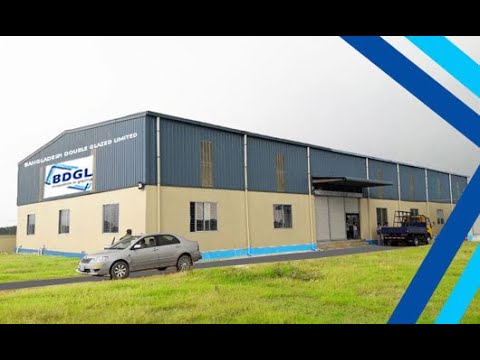
First mover in Bangladesh insulated-glass manufacturing since 2017 — the direct incumbent to compete with or partner with.
India's largest uPVC window and door manufacturer; proves the South Asian mid-market can absorb premium-performance glazing at scale.
More Low-Carbon Construction ideas
Other climate businesses we want built.