Idea Bank — Request for Climate Startups
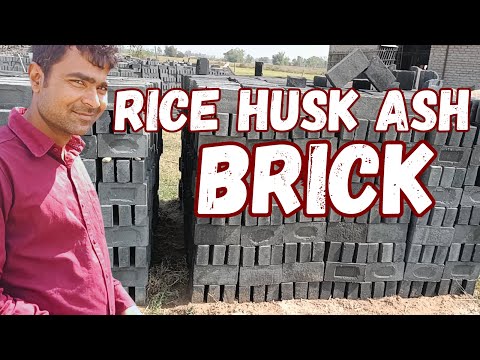
Rice-Husk Silica Bricks
A kiln-free brickmaker: structural blocks pressed from rice-husk ash.
The ask
A brickmaker that fires no kiln — structural blocks pressed from rice-husk ash and a binder, priced at or below a clay brick.
Why now
Rice-husk ash is a proven pozzolan — high in reactive silica. Pressing and curing husk-ash blocks without firing is cheap and well understood. The missing piece is a company that does it at construction-grade scale.
Why Bangladesh
Bangladesh produces roughly 9–10 million tonnes of rice husk a year — a cheap, nationwide waste stream, often simply burned. The country also lays around 35 billion clay bricks a year. This turns an agri-waste glut into the exact product the construction boom needs — minus the kiln, the coal, and the topsoil mining.
As a business
Small, replicable plants beside rice mills. Buy husk cheap — or take husk ash straight from rice-husk gasifiers — then press, cure, and sell into local construction. The margin comes from a structurally lower cost base, not a price premium.
Economics
Move the sliders to model your own plant. Defaults are order-of-magnitude estimates from public data — pressure-testing them is part of what a founder pitches us.
Model a rice-husk brick plant
Clears its setup cost after ~2.6 years, then profit (volt) from there. Hover or tap the chart for any month.
Illustrative model — defaults are order-of-magnitude estimates from public data, not a forecast. Pressure-test every number before you build.
Market. ~35 billion bricks a year at ৳8–13 each is a market on the order of US$3 billion — about 1% of GDP — across 7,800+ kilns. Capturing even 1% is ~350 million bricks.
What AimHuge would back
A team with a block that passes compressive-strength code and unit economics that beat clay at the kiln gate — capex-light enough to franchise per district.
Impact
At Bangladesh scale, displacing 1% of the country's 35 billion annual fired-clay bricks with husk-ash pressed blocks would avoid roughly 105,000 tCO₂e per year — a fired clay brick emits ≈0.3 kg CO₂e from coal combustion, which husk-ash pressing eliminates entirely. Each small plant employs 8–12 people and can run beside an existing rice mill, creating rural non-farm jobs in surplus-labour districts. Because coal is imported to fire kilns, every brick substituted keeps approximately US$0.006 in-country — at 350 million bricks that is over US$2 million/year in FX savings from a single 1% market share.
Also being built elsewhere
Companies proving the model in other markets.
Largest commercial processor of rice husk ash in South Asia, supplying silica and pozzolanic ash to cement and construction markets.
Converts rice husk to energy at mini-grid scale; generates large volumes of ash that can be channelled to brick or block production as a secondary revenue stream.
More Low-Carbon Construction ideas
Other climate businesses we want built.