Idea Bank — Request for Climate Startups
Terracotta Passive Cooling Panels
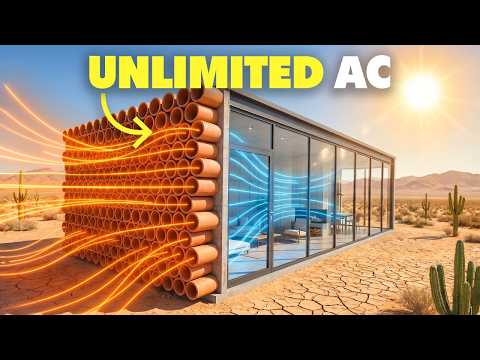
Zero-electricity terracotta honeycomb panels that cool rooms via evaporative airflow.
The ask
Manufacture modular terracotta honeycomb panels — inspired by Moorish mashrabiya screens and evaporative terracotta pot cooling — and sell them as passive façade or internal partition inserts that can cut indoor temperatures by 4–8°C in Bangladeshi summers without any electricity.
Why now
Bangladesh's peak summer temperatures now regularly exceed 40°C and the grid buckles each April–June; load-shedding during heat waves is becoming a public health emergency. AC penetration is growing 15% per year but the electricity infrastructure can't keep pace. A credible passive cooling product that works in hot-humid (not just hot-dry) conditions — clay with a high-surface-area honeycomb and capillary wicking — now has a clear market position: cheaper upfront than AC, zero running cost, and works during blackouts. IIT Madras and the Terracotta Cooling Window prototypes from Ahmed et al. (2021) prove the concept in similar climate conditions.
Why Bangladesh
Bangladesh has a mature terracotta tile-making industry concentrated in Rajshahi and Bogura; the raw clay, kilns, and skilled potters already exist. Adaptation is in the panel geometry and the mounting system, not the material. The addressable market starts with RMG factories and mid-rise apartment buildings that cannot afford 24/7 AC but face increasing regulatory pressure on worker heat exposure. BGMEA's heat-stress compliance deadline is a direct pull-through.
As a business
Revenue from panel sales direct to builders and architects (৳400–800/sq ft installed, vs ৳1,500–3,000/sq ft for a split AC system at comparable coverage), plus a recurring maintenance contract for re-wetting systems in large commercial installations. A factory at Rajshahi with 3–4 existing potters can produce 500–800 sq ft of finished panel per day at ৳120–160/sq ft COGS, leaving substantial gross margin.
Economics
Move the sliders to model your own passive cooling panel business. Defaults are order-of-magnitude estimates — pressure-testing them is part of what a founder pitches us.
Model a terracotta cooling panel factory
Clears its setup cost after ~1 months, then profit (volt) from there. Hover or tap the chart for any month.
Illustrative model — defaults are order-of-magnitude estimates from public data, not a forecast. Pressure-test every number before you build.
What AimHuge would back
A founder who has tested a prototype in a real building — one data point showing actual temperature delta in BD humidity — and has an existing relationship with either a Rajshahi potter collective or a mid-size building developer. The thermal performance claim is the product's entire value proposition; we'd fund a rigorous third-party test before a factory scale-up.
Impact
A terracotta passive cooling panel installation cutting indoor temperatures by 4–8°C in a 50 m² room can reduce AC unit runtime by 40–60%, saving ≈0.6–1.0 tCO₂e/yr per installation (based on a 1.5 kW split-AC running 8 hr/day in peak season on Bangladesh's coal-heavy grid at ≈0.65 kg CO₂e/kWh). At 600 sqft/day output × 280 days, a factory produces enough panel for ≈700 medium-sized room installations/year, collectively avoiding ≈500 tCO₂e/yr while creating 15–20 direct manufacturing and installation jobs. The product directly displaces grid electricity — and thus imported coal and fuel oil — keeping meaningful FX in-country.
Also being built elsewhere
Companies proving the model in other markets.
More Low-Carbon Construction ideas
Other climate businesses we want built.