Idea Bank — Request for Climate Startups
SugarCrete — Bagasse Building Blocks
Low-carbon structural blocks from sugarcane bagasse.
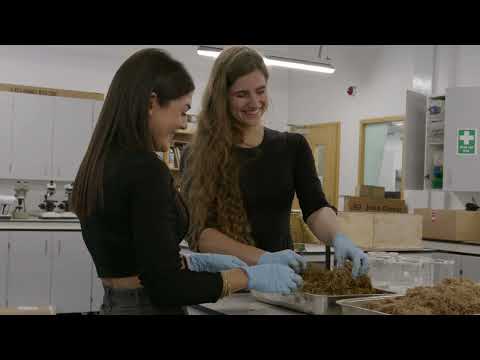
The ask
Low-carbon structural blocks made from sugarcane bagasse, replacing concrete block in low-rise construction.
Why now
Cement is around 8% of global CO₂. SugarCrete-type bagasse blocks have demonstrated 4–5× lower embodied carbon, lighter weight, and competitive cost for non- and semi-structural use — and the method is being shared open-access.
Why Bangladesh
Bangladesh's state sugar mills are chronically loss-making and sit on idle bagasse. A bagasse-block line gives a mill a second product and a region a cheaper block.
As a business
Co-locate with a sugar mill, adapt the method, and sell blocks regionally. The mill's bagasse handling already exists — so the capex is mostly the block-forming line.
Economics
Move the sliders to model a block line. Defaults are order-of-magnitude estimates — a founder validates them.
Model a bagasse block line
Clears its setup cost after ~16 months, then profit (volt) from there. Hover or tap the chart for any month.
Illustrative model — defaults are order-of-magnitude estimates from public data, not a forecast. Pressure-test every number before you build.
Market. Bangladesh consumes ~33 million tonnes of cement a year (৳480–535 a bag, 85%+ of clinker imported). Bagasse blocks ride the concrete-block segment underneath that — and demand grows with every new urban mid-rise.
What AimHuge would back
A founder who can lock a mill bagasse-supply deal and prove the block in real walls.
Impact
Sugarcrete-type bagasse blocks have 15–20% of the embodied carbon of traditional concrete blocks (≈0.04 kg CO₂e/kg vs ≈0.25 kg CO₂e/kg). At 1,500 blocks/day × 280 days, a single line avoids roughly 700 tCO₂e/yr compared to the concrete block baseline. Bangladesh imports over 85% of its cement clinker; bagasse blocks displace a portion of that demand — each tonne of bagasse used keeps approximately US$35 of clinker out of the import bill. Co-locating with state sugar mills converts a disposal cost (bagasse handling) into a revenue stream, strengthening the overall economics of chronically loss-making mills.
Also being built elsewhere
Companies proving the model in other markets.
More Low-Carbon Construction ideas
Other climate businesses we want built.