Idea Bank — Request for Climate Startups
Ground-Screw Foundations
Steel screw-pile foundations — no concrete, no curing.
The ask
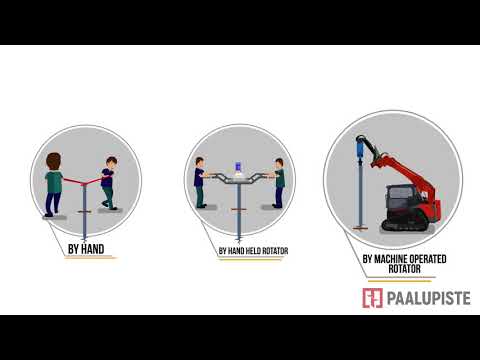
A foundation service that replaces poured-concrete footings with steel screw piles — installed by a small rig in hours, with no curing and no excavation.
Why now
Screw piles are standard in parts of Europe. They take the concrete — and the carbon, and weeks of schedule — out of a building's foundation, and they are removable and reusable.
Why Bangladesh
Bangladesh builds on soft delta soil and floods constantly. Screw piles handle poor soil and lift structures above flood level — ideal for rural housing, solar mounts, modular shops, and char-land buildings.
As a business
An install-service plus screw-supply company. Train crews and start with forgiving loads — solar farms, modular and agritech structures — then move into mainstream low-rise.
Economics
This one is a service business, so the model sizes one crew rather than a plant. Move the sliders.
Model a ground-screw foundation crew
Clears its setup cost after ~10 months, then profit (volt) from there. Hover or tap the chart for any month.
Illustrative model — defaults are order-of-magnitude estimates from public data, not a forecast. Pressure-test every number before you build.
Market. A slice of every low-rise building and every ground-mount solar array, riding a construction sector growing 7%+ a year. Per-job economics matter more than market share — the model above sizes one crew.
What AimHuge would back
A team with a local screw-supply line and a few load-tested installs.
Impact
A screw-pile foundation displaces approximately 0.3–0.5 m³ of concrete per residential footing, saving ≈75–120 kg CO₂e per foundation point versus poured concrete (≈250 kg CO₂e/m³). A single crew doing 8 jobs/month avoids ≈10 tCO₂e/yr from concrete displacement alone, with additional savings from eliminated excavation machinery and zero cure-water. Because piles are installed in hours rather than days, project timelines shrink, reducing on-site diesel burn. Steel screws are fabricated locally or regionally, keeping FX in-country compared to imported cement clinker.
Also being built elsewhere
Companies proving the model in other markets.
The largest European ground-screw manufacturer, active since 2004; proves product-market fit for solar, residential and modular construction at large scale.
Franchise model for helical screw-pile installation across North America; demonstrates how to scale a service business through certified installer networks.
More Low-Carbon Construction ideas
Other climate businesses we want built.