Idea Bank — Request for Climate Startups
Resin Bamboo Boards
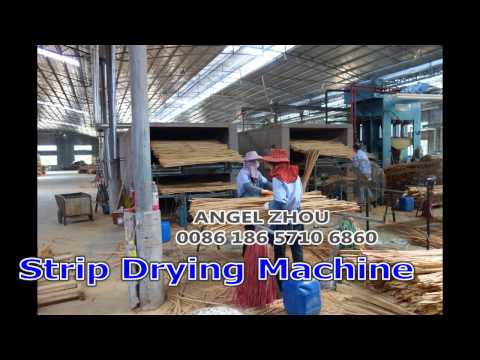
Press locally grown bamboo strips with bio-resin into structural boards substituting imported plywood.
The ask
Manufacture structural bamboo strand-woven or slat-laminated boards using Bangladesh-grown bamboo and a bio-based resin binder — sold as a direct substitute for imported plywood and particleboard in furniture, interior fit-out, and light construction.
Why now
Imported plywood prices have risen sharply in Bangladesh as teak and meranti supplies tighten; the import bill for wood panels runs over $150M/year. Bio-resin systems (soy-based PF replacements, tannin adhesives) have matured enough for commercial press lines. Vietnam and China have proven the strand-woven bamboo process at industrial scale — the technology is licensable. Bangladesh's bamboo plantation area is underutilised, with large natural stands in Sylhet and the Chittagong Hill Tracts that have no formal processing pathway.
Why Bangladesh
Bangladesh has an estimated 1.5–2 million tonnes of annual bamboo biomass potential, mostly harvested at subsistence scale with negligible value-add. Bamboo matures in 3–5 years versus 20–30 for timber — a natural fit for a country with limited forest cover. The garment sector's rapid furniture procurement cycle (factories refurbish every 3–5 years) is a large captive buyer for any quality-certified panel product that can beat import lead times and price.
As a business
Revenue is panel sales at ৳800–1,400/sheet (4×8 ft, 12 mm) versus ৳1,200–2,200 for equivalent imported plywood — price-competitive with a green-building story attached. The higher-value play is certified low-formaldehyde panels for export to the EU and Gulf furniture markets, where bio-based bamboo board commands a 40–80% premium. Plantation-owning farmers become contracted raw material suppliers, creating a backward-integration rural income story that strengthens the ESG narrative for export buyers.
Economics
Move the sliders to model your own bamboo board mill. Defaults are order-of-magnitude estimates — pressure-testing them is part of what a founder pitches us.
Model a bamboo board manufacturing plant
Clears its setup cost after ~10 months, then profit (volt) from there. Hover or tap the chart for any month.
Illustrative model — defaults are order-of-magnitude estimates from public data, not a forecast. Pressure-test every number before you build.
What AimHuge would back
A founder who has produced certified bamboo panels (any formaldehyde standard — E1 or F★★) and has a committed buyer — either a domestic furniture chain or an export trading house. We are particularly interested in founding teams that include a raw-material supply-chain builder, not just a manufacturing operator, given how fragmented Bangladesh's bamboo supply currently is.
Impact
Bangladesh imports over US$150 million/year of plywood and wood panels; a bamboo board plant producing 400 sheets/day × 280 days displaces ≈112,000 imported sheets/year, saving roughly US$560,000 in FX at an import-parity price of US$5/sheet. Bamboo sequesters ≈5–8 tCO₂e/ha/yr and matures in 3–5 years versus 30+ for timber; each tonne of bamboo board substituted for tropical plywood avoids ≈0.8 tCO₂e of embodied carbon. At default output a single plant avoids roughly 2,400 tCO₂e/yr while creating 30–60 direct and farm-level jobs.
Also being built elsewhere
Companies proving the model in other markets.
Global leader in certified bamboo panels for interior and exterior use; demonstrates that bamboo boards can achieve premium pricing with sustainability certification in Western markets.
Industrial-scale strand-woven bamboo board and decking manufacturer; the technical blueprint for a Bangladeshi bamboo board mill targeting export markets.
More Low-Carbon Construction ideas
Other climate businesses we want built.