Idea Bank — Request for Climate Startups
Rammed Earth Tool Kits
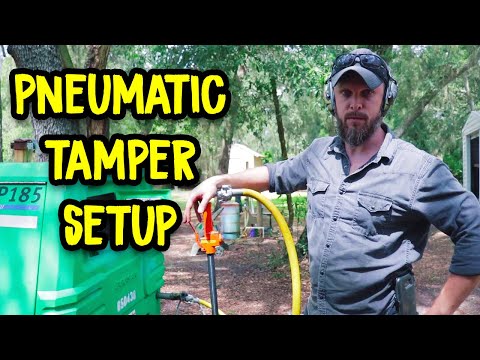
Pneumatic tampers and form systems purpose-built for rammed-earth construction, cutting wall time by half.
The ask
Design, manufacture, and sell a purpose-built pneumatic or electric tamper-and-formwork system optimised for rammed-earth construction — reducing wall-build time, improving density consistency, and making earthen building viable for professional contractors.
Why now
Rammed earth is experiencing a revival driven by embodied-carbon mandates in construction codes across South and Southeast Asia; architects specify it but contractors avoid it because improvised tools make quality inconsistent and labour-intensive. Purpose-built tampers from specialist suppliers remain rare and expensive; a locally manufactured kit at a fraction of import cost unlocks a large latent market.
Why Bangladesh
Bangladesh has abundant laterite and silty clay soils suitable for rammed earth in the Barind Tract and hilly regions of Chittagong; construction labour costs are low but skilled earthwork contractors are few. A simple, robust tool that a semi-skilled mason can operate consistently would make earthen construction commercially competitive against fired brick — which Bangladesh still produces at enormous carbon cost (roughly 8 billion bricks/year).
As a business
Revenue comes from direct tool sales to contractors and NGO construction programs, plus rental to self-builders. A construction training program bundled with tool certification creates recurring revenue and quality control for a certified earthen-builder network. Tool margins are high once tooling is amortised; the training arm is higher-margin still.
Economics
Move the sliders to model your own tool manufacturing business. Defaults are order-of-magnitude estimates — pressure-testing them is part of what a founder pitches us.
Model a rammed-earth tool business
Clears its setup cost after ~5 months, then profit (volt) from there. Hover or tap the chart for any month.
Illustrative model — defaults are order-of-magnitude estimates from public data, not a forecast. Pressure-test every number before you build.
What AimHuge would back
A founder who is simultaneously a builder and a product designer — someone who has completed rammed-earth projects and knows what tool failures look like on site. The market is niche but global; we would want export ambitions baked in from day one.
Impact
Bangladesh produces roughly 23 billion fired-clay bricks per year, each consuming approximately 0.3 kg CO₂e in coal-fired kiln emissions; every 1,000 m² of rammed-earth wall built with a pneumatic tamper kit displaces roughly 40,000 bricks and avoids 12 tonnes of CO₂e. At 20 kits sold per month and each kit enabling contractors to build 200 m² of earth wall per month, the cumulative installed base unlocks 48,000 m² of annual low-carbon wall construction — avoiding roughly 2,400 tCO₂e per year at steady state. The tool itself is domestically manufactured, so every kit sold displaces an imported Chinese or European equivalent, directly saving hard currency. Building with rammed earth also eliminates the coal cost embedded in fired bricks — Bangladesh imports roughly 7 million tonnes of coal per year primarily for brick kilns.
Also being built elsewhere
Companies proving the model in other markets.
Commercial rammed-earth system with purpose-built pneumatic formwork; has completed projects up to 650,000 sq ft — proves the tool-led professional model.
Start-up building the first automated rammed-earth machine (Freeform); shows the trajectory from manual tamper to mechanised system.
More Low-Carbon Construction ideas
Other climate businesses we want built.