Idea Bank — Request for Climate Startups
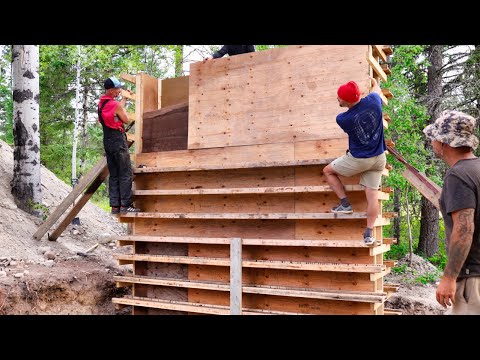
Rammed Earth Form Molds
Manufacture and sell rammed-earth formwork to enable fired-brick-free construction across rural Bangladesh.
The ask
Manufacture and sell rammed-earth compaction molds (formwork systems) to builders, NGOs, and government housing programmes in Bangladesh, enabling zero-kiln, zero-fired-brick wall construction using local soil — reducing embodied carbon by ~90% vs. traditional brick.
Why now
Bangladesh's brick kilns are the country's largest source of air pollution (Black Carbon) and consume ~13 million tonnes of topsoil per year. The High Court issued notices on kiln regulation in 2022; the government has been under pressure to find alternatives. Rammed earth (pisé) construction is now backed by updated ISO and ASTM standards, and several NGOs (GIZ, BRAC) have already trialled it in rural housing programmes. The formwork itself — not the soil or the labour — is the bottleneck: most Bangladeshi builders have never seen a rammed-earth form and cannot fabricate one locally.
Why Bangladesh
Bangladesh's alluvial clay soils are ideal rammed-earth material — good plasticity, low organic content, abundant everywhere. The country builds roughly 4 million new rural housing units per year, almost all fired brick; even 1% conversion represents 40,000 units. NGO and government rural housing programmes (Ashrayan, BRAC UHRC) are actively looking for cheaper, disaster-resilient alternatives: rammed earth outperforms brick in flood-zone lateral loads when properly stabilised. Tool manufacture leverages the country's existing metalworking and wood-fabrication ecosystem.
As a business
Revenue is mold sales (steel and timber form sets at ৳25,000–60,000 per set) and rental (৳3,000–6,000/week), plus a training and technical support subscription for NGO and government contractors. A single 4-worker team can rent one form set indefinitely — rental is the recurring revenue engine. Gross margin on mold manufacture is 45–55%; rental margin is 80%+ after the capital is recovered. Target customers: BRAC, GIZ-funded housing projects, and Upazila engineers overseeing Ashrayan-3.
Economics
Move the sliders to model your own rammed-earth mold business. Defaults are order-of-magnitude estimates — pressure-testing them is part of what a founder pitches us.
Model a rammed-earth formwork business
Clears its setup cost after ~8 months, then profit (volt) from there. Hover or tap the chart for any month.
Illustrative model — defaults are order-of-magnitude estimates from public data, not a forecast. Pressure-test every number before you build.
What AimHuge would back
A founder with construction engineering or rural infrastructure experience who already has a working prototype and has run at least one demonstration build with an NGO or government counterpart. The right go-to-market is partnerships with Ashrayan-3, BRAC UHRC, and GIZ — the founder needs to be able to navigate those procurement cycles, not just sell to individual builders.
Impact
Each rammed-earth mold set sold enables contractors to build without fired brick; a single set used across 10 housing projects/year displaces roughly 150,000 bricks per year, avoiding ≈45 tCO₂e/yr. The mold-sale and rental model is a force multiplier: 60 sets in a rental fleet can enable construction of 600+ housing units/year, collectively avoiding over 2,700 tCO₂e/yr. Since earth-wall construction uses on-site soil with 5–8% cement stabilisation, it dramatically reduces cement import dependency — each rammed-earth housing unit avoids approximately US$45 in imported clinker.
Also being built elsewhere
Companies proving the model in other markets.
Commercial rammed-earth construction and formwork supplier operating since 1992; proves the long-run viability of rammed earth as a mainstream building method.
European leader in rammed-earth tools and mechanised formwork; Martin Rauch's studio pioneered automated compaction systems that inform the next generation of commercial formwork design.
More Low-Carbon Construction ideas
Other climate businesses we want built.