Idea Bank — Request for Climate Startups
Open-Source Low-Carbon Housing
Open-source build plans and community guides for low-carbon homes without fired brick.
The ask
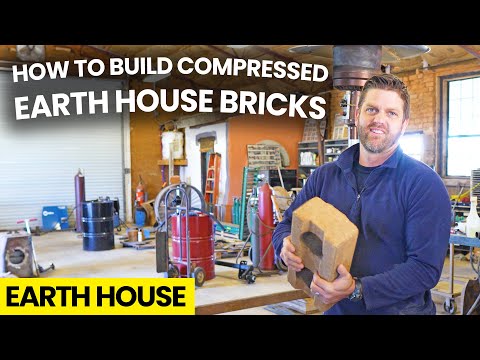
Publish open-source structural plans and community build guides for low-carbon housing — rammed earth, compressed stabilised earth blocks (CSEB), bamboo-composite, or jute-reinforced panels — and build a sustainable business around certification, training, licensed contractor networks, and material supply.
Why now
Bangladesh's fired-brick industry burns 8 million tonnes of coal equivalent per year and produces 7 % of the country's GHG emissions; the government has committed to phasing out topsoil-fired bricks by 2025 (enforcement is delayed but the policy direction is locked). CSEB and rammed-earth technologies have been validated by UN-Habitat and BUET in local soil conditions. Open-source plans lower adoption barriers in the NGO and self-builder market; the real business is in the services and supply chain that the open knowledge platform generates.
Why Bangladesh
Bangladesh builds approximately 2 million informal rural and peri-urban homes per year. The vast majority use fired brick and corrugated iron — high-carbon, poor thermal performance, and fragile in cyclone conditions. BUET studies show that CSEB structures can match fired-brick structural performance at 20–30 % lower cost using local soil, eliminating the fuel cost entirely. Coastal and char areas, where brick delivery is expensive and flood cycling damages mortar-brick bonds, are ideal early adopters. The Bangladesh National Building Code now includes provisions for earth-block construction.
As a business
The open-source plans are free — the business sits on top. Revenue streams: licensed contractor certification (৳20,000–40,000 per contractor per year), CSEB block press rental and sale (see Rammed Earth Formwork idea), material supply partnerships (stabilisers, bamboo reinforcement), and NGO/INGO technical services contracts for large-scale housing programmes (Rohingya resettlement, post-cyclone reconstruction). A 'build it yourself' online course (৳3,000–6,000 per enrolment) monetises the self-builder segment. The platform's open-source reputation drives NGO trust and government partnership that a purely commercial model would struggle to achieve.
Economics
Move the sliders to model your own open-source housing platform. Defaults are order-of-magnitude estimates — pressure-testing them is part of what a founder pitches us.
Model an open-source housing platform
Clears its setup cost after ~9 months, then profit (volt) from there. Hover or tap the chart for any month.
Illustrative model — defaults are order-of-magnitude estimates from public data, not a forecast. Pressure-test every number before you build.
What AimHuge would back
A founder who combines construction or structural-engineering credentials with community organising or NGO experience — this is a platform business that requires both technical credibility and grassroots distribution. We want to see at least 10 certified contractors already trained, one INGO partnership in discussion, and a clear theory of how the open-source model drives commercial revenue rather than undermining it.
Impact
If the platform certifies 1,000 contractors each building 20 low-carbon homes/year using CSEB or rammed earth, it enables the construction of 20,000 homes annually with ≈70% lower embodied carbon than fired brick — avoiding roughly 126,000 tCO₂e/yr. The open-source model accelerates adoption beyond what any single commercial builder could achieve, while the certification and training revenues create a self-sustaining business. A national contractor network also builds a domestic supply chain for low-carbon materials, reducing dependence on imported cement and coal.
Also being built elsewhere
Companies proving the model in other markets.
NGO-turned-platform that has improved 280,000+ buildings in disaster-prone countries using open technical standards plus contractor certification — the closest operational model.
Open-source modular housing system with a paid curriculum and licensing model; demonstrates how free plans can generate commercial training and certification revenue.
More Low-Carbon Construction ideas
Other climate businesses we want built.