Idea Bank — Request for Climate Startups
Low-Carbon Construction Training
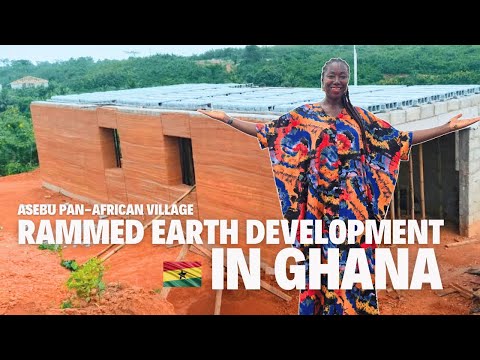
Vocational school teaching rammed earth, bamboo, and earth plaster to BD builders.
The ask
Launch a practical vocational training centre — and a travelling masterclass circuit — teaching Bangladeshi builders, contractors, and mason teams the hands-on skills to build with rammed earth, bamboo frame, and earthen plaster.
Why now
Bangladesh's construction sector is growing at 7–9% annually but almost no formal training exists in low-carbon methods. The government's National Skills Development Authority (NSDA) is actively certifying new trades; attaching a low-carbon construction credential to the NSDA framework unlocks both student recruitment and employer uptake. Internationally, embodied-carbon disclosure requirements are beginning to reach export-oriented industries, creating downstream pull for buildings that can document lower-emission construction.
Why Bangladesh
Bangladesh has a centuries-old tradition of earthen construction — rural homesteaders still build with clay and bamboo — so the material science is locally legible, not alien. Bamboo supply is abundant (Bangladesh is among the world's largest producers), and rice-husk ash can substitute for Portland cement in stabilised earth mixes. The construction workforce of ~3.5 million mostly lacks formal certification; a short-course credential commands a wage premium and creates a clear enrolment incentive.
As a business
Revenue comes from course fees (paid by trainees or sponsored by construction firms and NGOs), corporate in-house training contracts with mid-size developers, and government skill-development grants. Margin is high once curriculum and demonstration structures are built: recurring cohorts amortise fixed setup costs quickly. A certification licensing model — training the trainers across districts — scales without proportional headcount growth.
Economics
Move the sliders to model your own training centre. Defaults are order-of-magnitude estimates — pressure-testing them is part of what a founder pitches us.
Model a low-carbon construction training centre
Does not break even within 5 years at these inputs — adjust the sliders. Hover or tap the chart for any month.
Illustrative model — defaults are order-of-magnitude estimates from public data, not a forecast. Pressure-test every number before you build.
What AimHuge would back
A founder who has both built something with their hands and managed a training programme — the combination of craft credibility and instructional design is the moat. We would back a Dhaka-based centre that partners with two or three mid-size construction firms as anchor customers from day one, then uses that proof to pursue NSDA accreditation and NGO sponsorship channels.
Impact
Each certified graduate displaces conventional fired-brick and Portland-cement practice on every project they subsequently manage; a single trained mason foreman who shifts 30% of their annual output to rammed-earth or bamboo-frame construction avoids roughly 12 tCO₂e per year. At 200 trainees per year (10 cohorts of 20) and a conservative 5-tCO₂e annual displacement per trainee, the school prevents 1,000 tCO₂e per year in induced downstream carbon savings — a multiplier no manufacturing business can match. Training also creates a supply-side market for the other low-carbon construction businesses in this bank: without certified builders, every other idea here stays hypothetical. Each graduate entering the formal construction workforce represents a lifetime of lower-carbon building decisions across Bangladesh's 3.5-million-worker construction sector.
Also being built elsewhere
Companies proving the model in other markets.
World-leading earth-construction training centre; has trained builders from 40+ countries including Bangladesh; the institutional model to follow.
The academic and practitioner centre that wrote the technical standards for earthen construction globally; training partnership with them de-risks curriculum credibility.
More Low-Carbon Construction ideas
Other climate businesses we want built.