Idea Bank — Request for Climate Startups
Hemp-Lime Blocks — and their Jute Twin
Carbon-negative insulating blocks from jute hurd and lime.
The ask
A carbon-negative insulating block and wall material made from a fast-growing bast crop and lime.
Why now
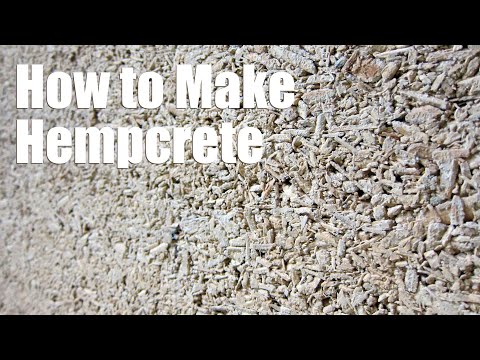
Hemp-lime — hempcrete — blocks lock up carbon, insulate well, regulate humidity, and resist mould. That is a strong fit for a hot, humid climate.
Why Bangladesh
Hemp is not a Bangladeshi crop — but jute is, and Bangladesh is the world's number-one jute grower, at 58% of global output. Jute hurd, the woody stick left over from fibre processing, is the direct analog to hemp shiv. A jute-lime block does for Bangladesh what hempcrete does elsewhere — on a crop the country already dominates.
As a business
Partner with jute mills for hurd supply, develop and certify a jute-lime block, and sell it as insulating infill or non-structural wall.
Economics
Move the sliders to model a jute-lime block line. Defaults are order-of-magnitude estimates.
Model a jute-lime block line
Clears its setup cost after ~24 months, then profit (volt) from there. Hover or tap the chart for any month.
Illustrative model — defaults are order-of-magnitude estimates from public data, not a forecast. Pressure-test every number before you build.
Market. The insulation and non-structural wall segment — small today, since Bangladesh has little insulation culture, but growing fast with AC penetration and heat stress. There is also a carbon-negative export angle.
What AimHuge would back
A founder who reframes this from "hemp" to "jute" and gets a block tested and certified.
Impact
Jute-lime blocks are carbon-negative: jute hurd sequesters ≈1.0 kg CO₂ per kg of dry fibre during growth, and lime re-absorbs CO₂ during carbonation, giving a net sequestration of ≈0.4 kg CO₂e per kg of finished block. At 1,000 blocks/day × 260 days, a single line sequesters roughly 300 tCO₂e/yr while processing an agricultural by-product that would otherwise be burned or landfilled. Lime can be produced domestically from Bangladesh's limestone deposits, but jute-hurd supply is entirely domestic — no FX cost, and every kilogram of lime displacing imported Portland cement saves approximately US$0.10 in foreign exchange.
Also being built elsewhere
Companies proving the model in other markets.
First US company to operate a large-scale hemp-lime insulation factory; proves a manufactured hempcrete block product can achieve commercial sales across multiple building types.
European leader in prefabricated hempcrete blocks sold to the mainstream construction market; demonstrates the export and premium-pricing potential of bio-lime insulation.
More Low-Carbon Construction ideas
Other climate businesses we want built.