Idea Bank — Request for Climate Startups
Earthen Cob Street Furniture
Hand-crafted cob benches and public furniture that seed demand for natural building in Bangladeshi cities.
The ask
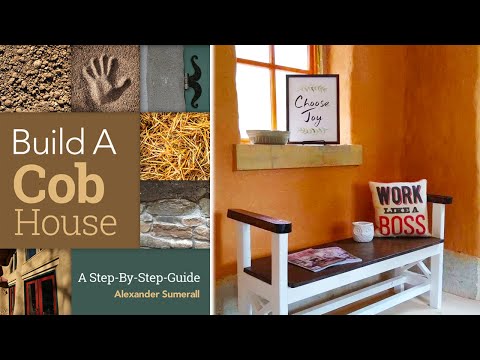
Manufacture and install cob (earthen) street furniture — benches, planters, bus stop shelters — under municipal and developer contracts, using the installations as live demonstrations that generate inbound demand for full cob construction projects.
Why now
Bangladesh's urban greening and livability programs (Dhaka North and South city corporations both have active streetscape upgrade budgets) are seeking material alternatives to concrete that look distinctive and communicate care. Cob has zero embodied cement and can be repaired with soil and straw by any local labourer. The recent global interest in biophilic design has created a buyer category — boutique hotels, eco resorts, corporate campuses — that will pay a premium for earthen aesthetics.
Why Bangladesh
Cob's primary inputs — clay soil, sand, straw — are universally available in Bangladesh and cost near zero. Labour is inexpensive. Fired-brick and concrete dominate because they are familiar, not because they are better for small-scale built elements. A credibly designed cob bench costs 60% less to produce than a precast concrete equivalent while being visually superior; the economic case is straightforward once the quality barrier (weather resistance) is solved with good lime plaster finishing.
As a business
Revenue from municipal and developer installation contracts; secondary from a training program for masons that creates a certified-builder network (and a referral pipeline). The business is honest about its ceiling: cob street furniture is an entry market and a marketing tool, not a scalable product alone. The real prize is cob construction contracts for eco-resorts and private homes, which the street furniture portfolio unlocks.
Economics
Move the sliders to model your own earthen furniture and construction business. Defaults are order-of-magnitude estimates — pressure-testing them is part of what a founder pitches us.
Model a cob furniture and construction business
Does not break even within 5 years at these inputs — adjust the sliders. Hover or tap the chart for any month.
Illustrative model — defaults are order-of-magnitude estimates from public data, not a forecast. Pressure-test every number before you build.
What AimHuge would back
Honestly, this is a craft business more than a venture-scale opportunity at the furniture level. We would only back it if the founder already has construction project revenue and is using the furniture line as deliberate marketing, not as the core business. The right structure is a construction company that makes furniture, not the reverse.
Impact
Cob construction uses zero Portland cement and zero fired clay, eliminating the two largest CO₂ sources in conventional street furniture: a standard precast-concrete bench requires roughly 30 kg of cement (24 kg CO₂e) and a concrete planter roughly 50 kg (40 kg CO₂e). A studio installing 100 benches and planters per year avoids roughly 6 tCO₂e in direct embodied carbon. The larger impact is indirect: cob street furniture functions as a live, public demonstration that diverts construction contracts toward earthen methods — each cob construction project won through this pipeline avoids 10–15 tCO₂e compared with a concrete equivalent. Materials sourcing is hyper-local (clay subsoil, straw, sand), so the entire revenue stream goes to labour and local supply chains, keeping money in the community and eliminating the import cost of cement and steel.
Also being built elsewhere
Companies proving the model in other markets.
More Low-Carbon Construction ideas
Other climate businesses we want built.