Idea Bank — Request for Climate Startups
Bio-Ceramic Disaster Housing
Geodesic bio-ceramic shell homes offering zero-carbon, cyclone-resilient housing for coastal BD.
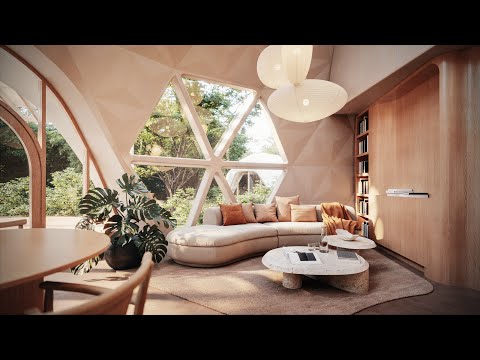
The ask
Adapt Geoship's bio-ceramic geodesic dome technology for Bangladesh's cyclone-prone coastal districts — producing lightweight, hurricane-rated, near-zero-carbon shell structures manufacturable in-country as an alternative to the concrete-block housing that fails in every major storm.
Why now
Geoship's bio-ceramic process (geopolymer cement + silica fume, no Portland cement) has been demonstrated at building scale in the US and produces structures rated to 250 mph winds. Bangladesh's 2022 National Adaptation Plan explicitly funds climate-resilient housing in 19 coastal districts. The government's Ashrayan project is spending ৳4,000+ crore relocating climate-displaced households — a procurement buyer exists right now.
Why Bangladesh
BD loses an estimated ৳15,000–25,000 crore in housing stock per decade to cyclones and storm surge. The coastal population — 35+ million people — lives in structures with a median lifespan of 12–15 years before storm damage. Geopolymer cement can be produced using fly ash from BD's coal plants (Payra, Rampal) and silica from rice husk — both locally available waste streams. A manufacturing plant in Khulna or Barisal could serve the entire southern coastal belt.
As a business
Sell to the government's Ashrayan programme and to NGOs (BRAC, Habitat for Humanity) as a premium resilient-housing product. A single shell structure (40–60 m²) priced at ৳8–12 lakh competes with a concrete-block room at ৳5–7 lakh but has a 50-year design life versus 15 years — a lifecycle cost argument that development-finance buyers will accept. Carbon credits from avoided Portland cement emissions are a secondary revenue stream.
Economics
Move the sliders to model your own bio-ceramic housing business. Defaults are order-of-magnitude estimates — pressure-testing them is part of what a founder pitches us.
Model a bio-ceramic dome housing business
Clears its setup cost after ~6 months, then profit (volt) from there. Hover or tap the chart for any month.
Illustrative model — defaults are order-of-magnitude estimates from public data, not a forecast. Pressure-test every number before you build.
What AimHuge would back
We want a construction-tech founder who has a licensed or adapted version of the bio-ceramic process and a signed MOU with Ashrayan or a large coastal NGO. The government procurement cycle is slow — the founder needs 18 months of runway before the first large contract lands. We'd co-invest with a development-finance partner (IFC, USAID DCA) to match the long sales cycle.
Impact
Bangladesh loses an estimated ৳15,000–25,000 crore of housing stock per decade to cyclones and storm surge; a bio-ceramic geopolymer dome rated to 250 mph winds with a 50-year design life eliminates repeated rebuilding cycles — each rebuild consuming 3–5 tonnes of Portland cement (2.5–4 tCO₂e) and 15,000 fired bricks (4.5 tCO₂e). Per unit, a bio-ceramic shell avoids roughly 7–8 tCO₂e compared with the concrete-block housing it replaces, and its geopolymer formulation uses fly ash from BD's coal plants and silica from rice husk — both waste streams — displacing clinker import. At 200 units per year the business avoids approximately 1,500 tCO₂e annually. The fly-ash and rice-husk inputs are domestic, eliminating $600–800 of cement clinker imports per home and keeping hard currency in-country.
Also being built elsewhere
Companies proving the model in other markets.
The originating bioceramic geodesic dome company; first manufacturing in 2024, 500-year design life rated to hurricane and seismic loads — the technology reference.
Biocementation using bacteria to grow structural materials without Portland cement; shows investor appetite for bio-mineral construction at commercial scale.
More Low-Carbon Construction ideas
Other climate businesses we want built.