Idea Bank — Request for Climate Startups
Bamboo Construction School
Train craftspeople and architects in structural bamboo construction techniques, creating a certified workforce for Bangladesh.
The ask
Establish a vocational training institute in Bangladesh — modelled on Bali's Bamboo U — that trains construction workers, carpenters, and architecture graduates in structural bamboo joinery, treatment, and design, creating a certified workforce for the country's emerging low-carbon construction sector.
Why now
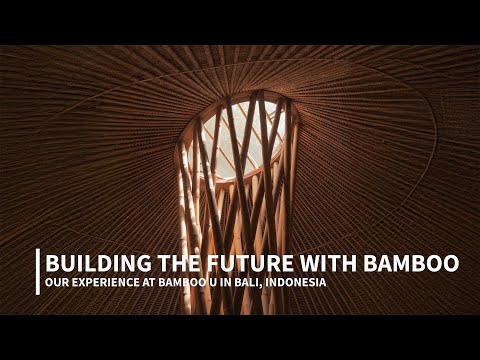
Bamboo U in Bali has trained over 1,000 people from 60 countries since 2012 and is operating at capacity with a waiting list — proving global demand for structured bamboo construction education. Bangladesh has no equivalent. The country's rapidly growing construction sector (8–10% of GDP) faces a skills gap as green building specifications begin to require bamboo and earthen materials. BGMEA and several NGO construction programmes have publicly stated they cannot find qualified bamboo builders at the volumes they need.
Why Bangladesh
Bangladesh is, paradoxically, one of the world's largest bamboo-growing countries but has almost no formal bamboo construction training infrastructure. The skills that exist are entirely informal and undocumented, making them invisible to institutional procurement. A Bangladeshi bamboo school could draw on the same internationally recognised curriculum as Bamboo U while localising for the Muli and Borak species dominant here. The school campus itself — built in bamboo — becomes the most powerful marketing asset and demonstration project simultaneously.
As a business
Revenue comes from course fees (৳15,000–60,000 per student per intensive course, depending on level and duration) paid by individuals, NGOs, and corporate construction teams. Government technical-vocational boards are beginning to accredit bamboo construction as a certified trade — first-mover accreditation gives the school a near-monopoly on the credential. Consulting revenue from advising on construction projects, materials certification, and curriculum licensing to regional partners adds a second stream. The school can also sell treated bamboo and hardware through a materials supply arm.
Economics
Move the sliders to model your own bamboo construction school. Defaults are order-of-magnitude estimates — pressure-testing them is part of what a founder pitches us.
Model a bamboo construction school
Does not break even within 5 years at these inputs — adjust the sliders. Hover or tap the chart for any month.
Illustrative model — defaults are order-of-magnitude estimates from public data, not a forecast. Pressure-test every number before you build.
What AimHuge would back
A founder who has already taught bamboo construction — even informally — and has a curriculum drafted and a campus site identified. We are looking for the educator-builder who understands both the craft and the institution-building challenge. Introductions to Bamboo U, INBAR (the International Bamboo and Rattan Organisation), and Bangladesh Technical Education Board are things AimHuge can bring to the table.
Impact
Every trained and certified bamboo builder enables ≈5–10 low-carbon buildings per year over their career. If 180 students/yr go on to build 5 bamboo-heavy structures each, the school indirectly avoids ≈540 tCO₂e/yr from kiln-brick displacement (each bamboo structure replacing ≈0.6 tCO₂e of fired brick). More importantly, the school creates the human capital bottleneck fix — Bangladesh's bamboo construction sector is currently skills-limited, not materials-limited. Wage premiums for certified bamboo builders also channel income into rural communities where bamboo is grown and harvested.
Also being built elsewhere
Companies proving the model in other markets.
The model being explicitly referenced — 1,000+ graduates from 60 countries since 2012, operating at capacity with a waiting list; proves global and local demand for structured bamboo construction education.
Intergovernmental body that certifies bamboo construction curricula and has trained thousands of builders in Africa and Latin America; a natural accreditation and curriculum partner.
More Low-Carbon Construction ideas
Other climate businesses we want built.