Idea Bank — Request for Climate Startups
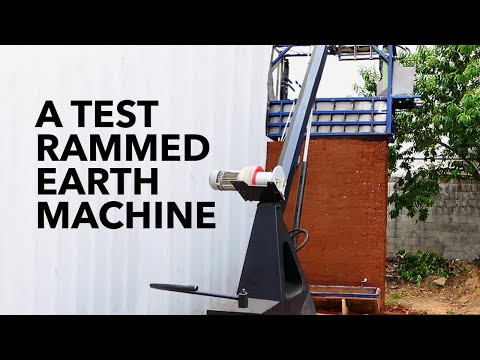
3D-Printed Rammed Earth
3D-printed walls from local subsoil instead of concrete.
The ask
A construction company that 3D-prints walls from local subsoil — rammed earth or cob — instead of concrete.
Why now
Earthen building is ancient and near-zero-carbon. The new part is automating it: gantry and robotic printers that lay stabilised earth, removing the labour and skill bottleneck that kept rammed earth niche.
Why Bangladesh
Earth is the cheapest material on every site, and thick earth walls stay cool — less air-conditioning. The barrier has always been skilled labour and consistency, and automation fixes exactly that.
As a business
A printer-plus-crew service for low-rise homes, walls, and community buildings — or selling printed components to other builders.
Economics
🚧 Too early to model. This is the frontier bet of the theme — a gantry earth-printer is R&D-stage capital, and a payback figure today would be fiction. Feedstock (subsoil) is effectively free and on-site; the cost is the machine and skilled operation, and the economics only clear once printer throughput beats a masonry crew. Fund the prototype, not the spreadsheet.
What AimHuge would back
A team that has printed a real load-bearing earth wall and has a soil-mix recipe that survives the monsoon.
⚠️ The source reel link is missing from the original Notion entry — to be added.
Impact
A gantry earth-printer that builds low-rise walls from excavated subsoil eliminates the two largest embodied-carbon inputs in conventional Bangladeshi construction: fired-clay bricks (≈ 0.3 kg CO₂e each, 23 billion/year nationally) and Portland cement (≈ 800 kg CO₂e per tonne). A single automated printer building 10 homes per year — each substituting 40,000 bricks and 5 tonnes of cement — avoids roughly 160 tCO₂e per year. Thick earth walls also provide 30–50% better thermal mass than thin brick, cutting air-conditioning load and the associated grid emissions. The labour efficiency gain, not carbon, is the commercial hook — but the carbon dividend makes the technology fundable under climate-finance mandates, and the subsoil feedstock means zero import cost per cubic metre of wall material.
Also being built elsewhere
Companies proving the model in other markets.
Built Gaia, the first 3D-printed earth house, using rice-husk waste binder; the proof-of-concept closest in material and climate to Bangladesh.
Developing the Freeform automated rammed-earth machine for house walls; the most direct mechanisation analogue to the BD opportunity.
More Low-Carbon Construction ideas
Other climate businesses we want built.