Idea Bank — Request for Climate Startups
Urban Greens Farm
Hyper-local salad and leafy-green production inside or on top of Dhaka buildings.
The ask
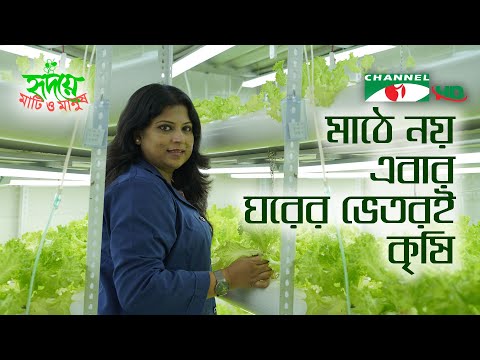
Build a commercially scaled urban greens farm — rooftop, basement, or repurposed industrial space — that supplies restaurants, supermarkets, and institutional kitchens in Dhaka with fresh leafy vegetables grown within the city, eliminating the cold-chain losses and contamination risks of rural supply.
Why now
Proof points are multiplying globally: Infarm, AppHarvest, and dozens of smaller operators have demonstrated that leafy greens can be grown in controlled indoor environments at yields 20–100x conventional agriculture per square metre. Operating costs are falling sharply as LED grow-light efficiency improves and hydroponic system designs become commoditised. In Bangladesh, a food-safety scandal roughly every 18 months — pesticide contamination, formalin adulteration — has created a premium-paying segment of urban consumers who will pay a meaningful markup for provably clean greens.
Why Bangladesh
Dhaka imports nearly all its fresh vegetables from peri-urban farms in Munshiganj and Manikganj, typically via open truck with no cold chain — a 6–12 hour journey that causes 20–30% post-harvest loss. The city's flat rooftops are largely unused and structurally capable of bearing a hydroponic tray system. Power reliability has improved, and solar on the same roof can offset much of the grow-light load. A 2,000 sq ft rooftop farm can produce roughly 400 kg of mixed greens per month — enough to supply a mid-size hotel or a cluster of 10–15 restaurants.
As a business
Revenue comes from direct supply contracts with hotels, restaurants, and premium supermarkets (Shwapno, Meena Bazar) at ৳120–200 per kg for mixed greens versus ৳40–80 for conventional equivalents — justified by freshness guarantees, pesticide-free certification, and same-day delivery. A subscription box for health-conscious households adds a D2C layer. The operator's competitive moat is consistent quality and reliability of supply; the farm cannot run out of stock the way a rural supplier does after a flood.
Economics
Move the sliders to model your own urban greens farm. Defaults are order-of-magnitude estimates — pressure-testing them is part of what a founder pitches us.
Model an urban greens farm
Does not break even within 5 years at these inputs — adjust the sliders. Hover or tap the chart for any month.
Illustrative model — defaults are order-of-magnitude estimates from public data, not a forecast. Pressure-test every number before you build.
What AimHuge would back
We want a founder who has either operated in food service — and therefore understands what a B2B buyer actually needs — or who has hands-on growing experience with hydroponics or controlled-environment agriculture. Pre-signed letters of intent from 3–5 restaurants or a single hotel group would sharply de-risk a seed pitch. We are open to a portfolio model where the operator licenses the grow-system design to building owners and manages multiple sites on a franchise-like basis.
Impact
An indoor greens farm in Dhaka producing 400 kg of leafy vegetables per month eliminates the 200 km round-trip truck supply chain (peri-urban to city), avoiding roughly 4 tonnes CO₂e per year in transport and cold-chain losses. Zero pesticide use removes the formalin and chemical-adulteration risk that periodically removes entire categories of vegetables from Dhaka markets, providing a food-safety premium. LED-powered hydroponic systems can run on solar or grid-mixed power, and as grid decarbonises, the embedded carbon per kilo drops automatically. The operation saves an estimated US$3,000–6,000 per year in imported nutrients versus conventional equivalents at this scale.
Also being built elsewhere
Companies proving the model in other markets.
First documented indoor vertical farm in Dhaka's Mirpur; proves technical feasibility in the Bangladesh context using hydroponics in a repurposed building.
Indoor agritech operation in land-scarce Singapore; demonstrates premium pricing and institutional-buyer channels viable in dense South-East Asian cities.
More Regenerative Agriculture ideas
Other climate businesses we want built.