Idea Bank — Request for Climate Startups
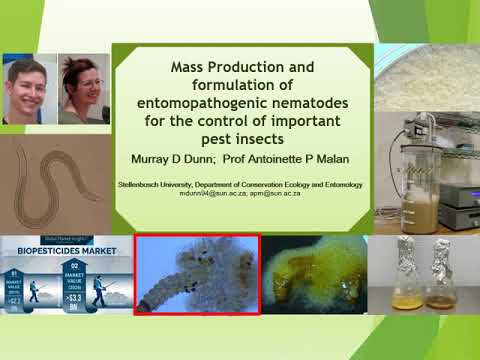
Beneficial Nematodes Biopesticide
Mass-produce soil nematodes to replace chemical pesticides on Bangladeshi vegetable farms.
The ask
Set up a Bangladesh-based production facility for entomopathogenic nematodes — microscopic soil worms that kill grubs, root flies, and thrips larvae — and sell them to vegetable and floriculture farmers as a certified bio-pesticide replacement, targeting the ৳800+ crore agri-chemical market.
Why now
The EU's Farm-to-Fork regulation is making pesticide residue limits stricter for all imported produce; Bangladeshi vegetable exporters (₯60 crore annual export value and growing) already face rejection-at-port events. Simultaneously, DAE (Department of Agricultural Extension) is running a Integrated Pest Management programme in 400 upazilas but has no domestic supply of bio-controls to recommend — it defaults back to chemical advice. Nematode production in liquid fermentation is a solved technology; a small fermentation unit costs ৳30–50 lakh to set up and can produce millions of infective juveniles per week.
Why Bangladesh
Chemical pesticide use in Bangladesh has tripled since 2000 and contamination of soil and water is a documented public-health problem in Jessore, Bogura, and Comilla vegetable belts. Smallholder farmers cannot afford the liability of export rejection; a locally produced bio-pesticide at ৳200–400 per application (comparable to chemical cost) would win on economics alone once efficacy is demonstrated. Bangladesh also has a nascent floriculture export sector — cut flowers are extremely pesticide-sensitive — and a growing domestic organic-vegetable segment in Dhaka.
As a business
Revenue from direct sales to farmer cooperatives and agri-input dealers (৳250–400 per 50-million-nematode sachet covering one bigha), plus supply agreements with vegetable export aggregators who need residue-free certification. Gross margins are 55–65% once the fermentation process is optimised; the key cost is cold-chain distribution since nematodes are live organisms with a 6-week shelf life at 4°C.
Economics
Move the sliders to model your own nematode production business. Defaults are order-of-magnitude estimates — pressure-testing them is part of what a founder pitches us.
Model a beneficial nematode production unit
Does not break even within 5 years at these inputs — adjust the sliders. Hover or tap the chart for any month.
Illustrative model — defaults are order-of-magnitude estimates from public data, not a forecast. Pressure-test every number before you build.
What AimHuge would back
A founder with a microbiology or agricultural science background and an existing DAE or cooperative distribution relationship — someone who can navigate the pesticide registration process (BARC approval) and demonstrate efficacy on a local pest species within one growing season. We'd fund the lab setup and first field trials; scale requires cold-chain infrastructure, which is the harder second problem.
Impact
At 3,000 sachets per month, a nematode production unit replaces roughly 3,000 chemical-pesticide applications per month across Bangladeshi vegetable farms — each substitution avoiding approximately 200–400 g of synthetic active ingredient. Scaled to 20,000 sachets per month, the facility prevents roughly 5–8 tonnes of hazardous pesticide from entering Bangladeshi soils per year and avoids an estimated 40–60 tCO₂e in synthetic agrochemical manufacturing emissions. The cold-chain requirement, while a cost, also modernises rural distribution infrastructure and creates 30–50 formal jobs in refrigerated logistics and field agronomy.
Also being built elsewhere
Companies proving the model in other markets.
Specialist entomopathogenic nematode producer; featured in EU BIOCOMES research — the technical benchmark for commercial liquid-fermentation EPN production
Also produces commercial nematode products alongside insects; shows the two product lines (insects + nematodes) are complementary in the same insectary business
More Regenerative Agriculture ideas
Other climate businesses we want built.