Idea Bank — Request for Climate Startups
Beneficial Insect Biocontrol
Breed and sell predatory insects replacing chemical pesticides on Bangladesh's farms.
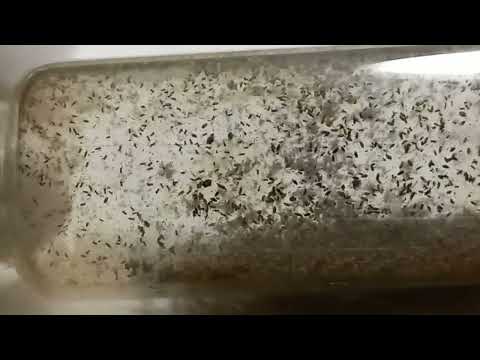
The ask
Build a commercial insectary producing beneficial insects — Trichogramma wasps, predatory mites, aphid-eating lacewings — and sell them to BD's vegetable and fruit farmers as an evidence-based chemical-pesticide replacement.
Why now
Biological pest control is a $5 billion global industry growing at 16 % per year; Koppert, Biobest, and several Indian producers (Indam Bio) have proven the commercial model at scale. The EU's Farm to Fork strategy is tightening pesticide MRL limits in 2025–2026, directly threatening BD's vegetable export market (৳800+ crore/year to Europe) — farmers who cannot show reduced pesticide use will lose contracts. BD's Department of Agricultural Extension has been recommending IPM since 2018 but no local supplier exists at commercial scale.
Why Bangladesh
BD farmers spend an estimated ৳6,000–8,000 crore per year on pesticides, many of them WHO Class I or II hazardous products banned in the EU. Beneficial insects are non-toxic residue-free by definition, solving the export-certification problem. Bangladesh's tropical climate supports year-round insect production without heated greenhouses (unlike northern Europe). The raw material — host insects, growing media — is available locally at low cost. One insectary can supply a 200 km radius via motorcycle courier in temperature-controlled boxes.
As a business
Sell sachets or cards of beneficial insects to farmer cooperatives, export-vegetable contract farms, and progressive individual farmers via agri-input dealers. Pricing: ৳800–2,500 per application per bigha, replacing ৳400–900 per application of chemical spray — the premium is justified by export certification and yield uplift. Recurring revenue: insects need re-application every 2–4 weeks, so a farm that converts is a subscription.
Economics
Move the sliders to model your own biocontrol insectary. Defaults are order-of-magnitude estimates — pressure-testing them is part of what a founder pitches us.
Model a beneficial-insect insectary
Clears its setup cost after ~15 months, then profit (volt) from there. Hover or tap the chart for any month.
Illustrative model — defaults are order-of-magnitude estimates from public data, not a forecast. Pressure-test every number before you build.
What AimHuge would back
This is one of the most investable ideas in this cohort: recurring revenue, clear cost displacement, export-market tailwind. We want a founder with entomology or plant-science credentials who has already run a small insectary and sold product to at least 50 farmers. A partnership with one export-vegetable cooperative as anchor customer would de-risk the commercial model before we commit capital.
Impact
Bangladesh's vegetable farmers spend an estimated ৳6,000–8,000 crore per year on pesticides, many of them WHO Class I or II hazardous products; replacing 1% of that market with beneficial insects would divert ৳60–80 crore of chemical spend annually, with corresponding reductions in synthetic agrochemical production emissions. Every bigha converted to biocontrol avoids roughly 400 g of active pesticide ingredient per season — at 1,500 applications per month the insectary prevents approximately 7 tonnes of pesticide from entering Bangladeshi soil and water per year. The export-vegetable tailwind is significant: farmers who demonstrate reduced-residue production via biocontrol can access premium EU contracts worth 20–30% more per tonne than conventional produce.
Also being built elsewhere
Companies proving the model in other markets.
World leader in commercial beneficial insect production; active in India proving the model in a comparable South Asian agricultural context
Second-largest biocontrol insectary globally; $5B market growing 16%/yr — validates the sector's commercial maturity and recurring-revenue model
Indian biocontrol producer commercially selling Trichogramma and predatory mites to farmers — nearest South Asian analogue for Bangladesh entry
More Regenerative Agriculture ideas
Other climate businesses we want built.