Idea Bank — Request for Climate Startups
Spirulina Cultivation and Export
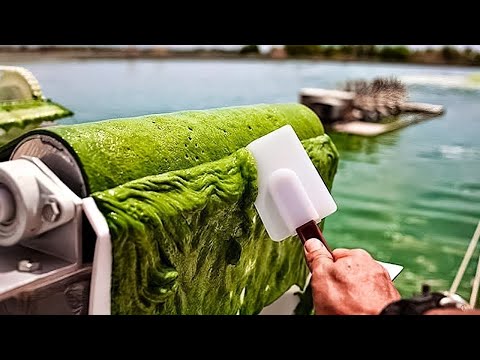
Commercial spirulina grown in BD's warm climate for protein export and domestic nutrition.
The ask
Build a spirulina cultivation and processing company in Bangladesh, targeting the protein supplement export market (Southeast Asia, Middle East) and the domestic clinical nutrition market (stunting, anaemia), using open raceway pond systems on low-value peri-urban land.
Why now
Global spirulina demand is growing at 10% CAGR, driven by plant-protein and supplement markets; the retail price in Europe runs USD 25–40/kg dried. At the same time, production costs have dropped as raceway pond design is now open-source and well-documented, and Bangladesh's year-round temperatures of 25–35°C match spirulina's optimal growth window without heating costs. BFRI's aquaculture research station in Mymensingh has published baseline cultivation data for Bangladesh conditions.
Why Bangladesh
Spirulina grows in alkaline water — Bangladesh's north-west districts (Rajshahi, Chapai) have naturally alkaline pond water from limestone geology, a free input advantage. The country also has a severe stunting problem (28% of children under 5) that creates both a social mission and a domestic institutional buyer: UNICEF, WFP, and DGHS procurement for therapeutic food programs. A domestic anchor customer de-risks the export ramp. And land cost in peri-urban Rajshahi is a fraction of competing production locations in India or China.
As a business
The company earns on two channels: bulk dried spirulina (powder or tablets) exported at USD 12–18/kg to supplement formulators in Malaysia, UAE, and Europe; and a branded domestic clinical nutrition product sold through pharmacies and government nutrition programs. Working capital cycles are short (harvest every 7–10 days); the limiting factor is consistent quality control for export, which requires a basic spray-dryer and lab testing setup that becomes the entry barrier against informal competitors.
Economics
Move the sliders to model your own spirulina farm. Defaults are order-of-magnitude estimates — pressure-testing them is part of what a founder pitches us.
Model a spirulina cultivation business
Clears its setup cost after ~3 months, then profit (volt) from there. Hover or tap the chart for any month.
Illustrative model — defaults are order-of-magnitude estimates from public data, not a forecast. Pressure-test every number before you build.
What AimHuge would back
We want a founder with a food science or aquaculture background who has already produced a test batch meeting export quality standards (moisture, heavy metals, microbial count). The right team has either an export offtake letter of intent or a government nutrition program pilot in hand before we write the first cheque. We are backing the quality infrastructure — the spray-dryer, the lab — not the pond itself.
Impact
Spirulina fixes CO₂ at roughly 1.8 kg per kg of biomass produced — a 5,000 m² raceway farm yielding 50 tonnes per year sequesters approximately 90 tonnes of CO₂e, with the net benefit depending on what protein source it displaces in export markets (animal protein baseline: ≈ 30 kg CO₂e per kg). The domestic clinical nutrition channel directly addresses Bangladesh's 28% childhood stunting rate, reducing the healthcare burden linked to protein and micronutrient deficiency. Export revenues earn hard currency at USD 12–18/kg, displacing imports of comparable supplement products. The production system uses minimal land and no synthetic pesticides, avoiding the N₂O and runoff impacts of conventional crop farming on the same land.
Also being built elsewhere
Companies proving the model in other markets.
Bangkok-based urban spirulina producer raised $3.6 M Series A; uses rooftop raceway ponds in tropical Southeast Asia — direct climate analogue to Bangladesh.
Indian spirulina exporter supplying European B2B formulators at scale; proves the India→Europe export pathway that a Bangladesh producer can replicate.
More Regenerative Agriculture ideas
Other climate businesses we want built.