Idea Bank — Request for Climate Startups
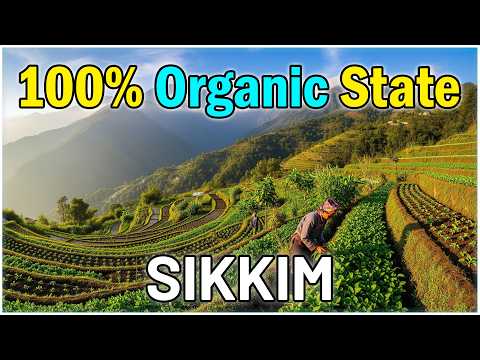
Sikkim Organic Farming Model
Apply Sikkim's state-level organic conversion playbook to a Bangladeshi district.
The ask
License and adapt the Sikkim organic-state model — mandatory chemical-free certification backed by state procurement guarantees — to pilot a fully organic agricultural district in Bangladesh, then commercialise the resulting premium food exports.
Why now
Sikkim achieved 100 % organic certification across 76 000 hectares by 2016; yield data over 10 years now shows a 5–15 % long-run output recovery after the transition dip — removing earlier objections. Bangladesh's soil fertility is declining from chemical overuse (ADB, 2023), creating a policy opening. International demand for certified organic rice, tea, and spices from South Asia outpaces supply; Bangladesh's geographic proximity to Kolkata and Chittagong ports makes export logistics competitive.
Why Bangladesh
Bangladesh's hill tracts (Rangamati, Bandarban, Khagrachhari) are already lower-input farming zones with indigenous communities predisposed to organic practice — conversion cost and yield shock are both smaller than on intensively farmed plains. The government's "Smart Bangladesh" agriculture pillar is seeking model districts; an NGO-backed or government-partnership approach can access land and farmer co-operation that would be impossible commercially. Certified organic aman rice from Bangladesh commands ৳80–120/kg vs ৳30–40/kg conventional.
As a business
The commercial entity aggregates and exports certified organic produce under a single brand, capturing the premium-price spread between farm-gate and export FOB. Revenue per tonne of organic rice is roughly double conventional; the certification cost is borne once per district and spread across hundreds of farmers. A B2B contract with EU or Gulf organic importers locks in pricing before the harvest, reducing market risk. The company's value is in the certification infrastructure, aggregation logistics, and buyer relationships.
Economics
Move the sliders to model your own organic aggregation business. Defaults are order-of-magnitude estimates — pressure-testing them is part of what a founder pitches us.
Model an organic rice export aggregator
Clears its setup cost after ~5 months, then profit (volt) from there. Hover or tap the chart for any month.
Illustrative model — defaults are order-of-magnitude estimates from public data, not a forecast. Pressure-test every number before you build.
What AimHuge would back
A founder with deep government relationships in the Chittagong Hill Tracts or Sylhet tea belt and a committed export buyer — ideally both. This is a proof-of-concept investment; we are backing the team that can navigate the Bangladesh public-sector partnership and land a first export contract, then replicate across districts.
Impact
Transitioning a pilot district to certified organic production eliminates an estimated 800–1 200 tonnes of synthetic nitrogen fertiliser per year (each tonne of urea avoided saves ~7 tCO₂e of production emissions) and stops nitrous-oxide field emissions that are 265× more potent than CO₂. At 500 tonnes of aggregated premium-organic rice, the model displaces synthetic-fertiliser imports worth roughly USD 150 000 annually while earning a 35–50% export price premium that flows back to Bangladeshi smallholders. The certification infrastructure built for rice can be extended to spices, pulses, and vegetables, creating a replicable district-scale template across Bangladesh's 64 districts.
Also being built elsewhere
Companies proving the model in other markets.
37+ years aggregating and exporting certified organic commodities to USA, Europe, and Middle East — direct model for a Bangladesh export aggregator.
ISO 17065-accredited organic certifier operating across South Asia and Africa; third-party certification partner for any organic-district scheme.
More Regenerative Agriculture ideas
Other climate businesses we want built.